






Canada’s Bold Space Plan Could Uncover Earth-Like Worlds Faster Than Ever

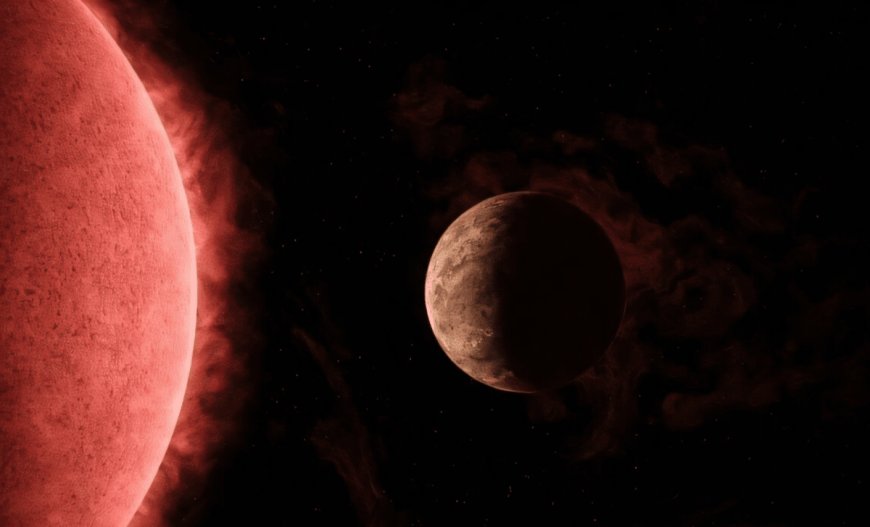
A new Canadian-led mission proposal could redefine how scientists search for habitable planets beyond our solar system, focusing on some of the smallest and dimmest stars in the galaxy. Detailed in a recent ArXiv study, the POET (Photometric Observations of Exoplanet Transits) mission aims to detect Earth-sized exoplanets orbiting ultracool dwarf stars, offering a powerful new pathway in the hunt for extraterrestrial life.
A Focus On The Smallest Stars With The Biggest Potential
The strategy behind POET centers on a simple but powerful idea: smaller stars make it easier to detect smaller planets. Ultracool dwarfs, including K-type, M-type, and brown dwarfs, are significantly smaller than our Sun, sometimes only about 10% of its diameter. This size difference dramatically amplifies the observable effect when a planet crosses in front of its host star, producing a more noticeable dip in brightness.
This transit method has already proven effective in identifying thousands of exoplanets, yet targeting ultracool dwarfs could push detection limits further than ever before. By focusing on these faint stars, POET is expected to identify planets ranging from 1 to 2.5 times Earth’s radius, many of which may orbit within distances that allow liquid water to exist. The mission’s design reflects a growing shift in exoplanet science toward optimizing detection conditions rather than simply scaling telescope size.
Drawing on simulations, researchers narrowed an initial catalog of over 7,200 candidate stars down to about 3,000 viable targets within 100 parsecs (326 light-years). From these, a prioritized list of 100 to 300 stars could form the backbone of a one-year observation campaign, maximizing the mission’s scientific return while maintaining operational efficiency.
Building On Canada’s Space Telescope Legacy
According to Universe Today, the POET mission builds directly on Canada’s earlier microsatellite successes, including MOST (launched in 2003) and NEOSSat (launched in 2013). Both missions demonstrated that compact, cost-effective telescopes can deliver meaningful scientific results. MOST notably contributed to exoplanet science by revealing the unusually low reflectivity of a hot Jupiter orbiting HD 209458, while NEOSSat focused on tracking near-Earth objects and orbital debris.
Unlike its predecessors, POET introduces expanded observational capabilities. Its 20-centimeter aperture improves light-gathering power, while its ability to observe across near-ultraviolet, visible, near-infrared, and short-wave infrared wavelengths significantly broadens its scientific reach. These enhancements are designed to capture subtle variations in stellar brightness with greater precision, a critical factor in detecting smaller, Earth-like planets.
The study, published on ArXiv, outlines how these technological upgrades could enable POET to outperform earlier missions in both sensitivity and versatility, positioning it as a key contributor to next-generation exoplanet discovery efforts.
A Gateway To Atmospheric Analysis And Biosignatures
One of the most compelling aspects of the POET mission lies in what happens after discovery. Identifying Earth-sized planets is only the first step; the real breakthrough comes from studying their atmospheres. Planets orbiting ultracool dwarfs often have short orbital periods, meaning they transit their stars frequently, providing repeated opportunities for detailed observation.
The research highlights the broader implications of these findings, stating:
“Newly-discovered Earth-sized planets around the nearest ultracool dwarfs would be excellent targets for atmospheric characterization. With orbital periods <7 days, these are likely to be in the habitable zones of their ultracool host stars. They would automatically become top-priority targets for biosignature gas searches with the Webb Space Telescope, or with the Habitable World Observatory further in the future. Hence, POET could deliver some of the most promising Earth analogues for the search for extrasolar life.”
This connection to powerful observatories like the James Webb Space Telescope and the planned Habitable Worlds Observatory underscores POET’s strategic value. Rather than working in isolation, the mission would act as a discovery engine, feeding high-quality targets into a broader ecosystem of space-based instruments designed to probe planetary atmospheres for signs of life.
Why Ultracool Dwarfs Could Change The Search For Life
Ultracool dwarfs have long been overlooked in favor of Sun-like stars, largely due to observational challenges and assumptions about habitability. Yet recent discoveries suggest these stars may host a rich population of planets, many of which remain undetected. Their lower luminosity shifts habitable zones much closer to the star, increasing the likelihood of detectable transits and making them ideal candidates for focused surveys.
The POET mission reflects a growing recognition that the search for life may benefit from targeting environments very different from our own solar system. By expanding the scope of exploration to include these smaller, cooler stars, scientists are effectively widening the net in one of humanity’s most profound quests.
If successful, POET could help identify some of the nearest and most accessible Earth-like worlds, setting the stage for future missions to investigate their atmospheres in detail and, potentially, detect the chemical fingerprints of life.
Enjoyed this article? Subscribe to our free newsletter for engaging stories, exclusive content, and the latest news.
What's Your Reaction?
 Like
0
Like
0
 Dislike
0
Dislike
0
 Love
0
Love
0
 Funny
0
Funny
0
 Angry
0
Angry
0
 Sad
0
Sad
0
 Wow
0
Wow
0