


Archaeologists Discover 80-Ton Stones Beneath the Sea, Believed to Be Remains of One of the Seven Wonders of the Ancient World

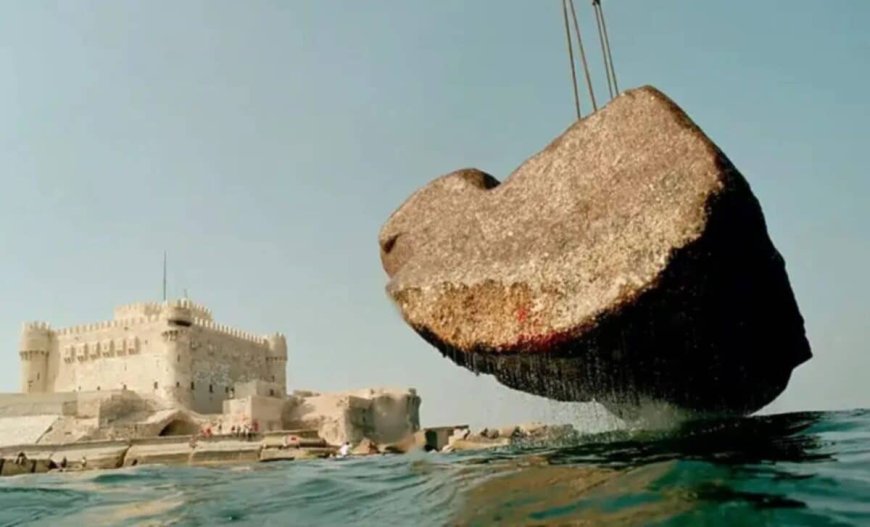
More than 1,600 years after its disappearance, massive stones from the Lighthouse of Alexandria are being recovered from the Mediterranean seabed. Archaeologists have brought up massive stone blocks tied to one of the seven wonders of the ancient world.
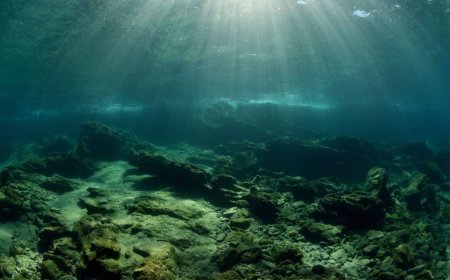
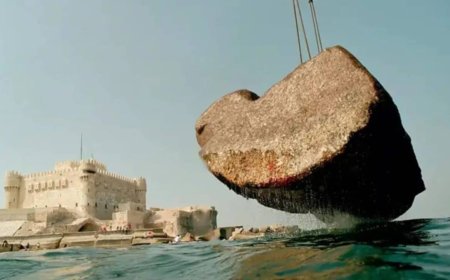
In the waters off Alexandria, a submerged site known for decades is now yielding some of its most striking elements. The PHAROS project reports that 22 monumental stone blocks linked to the lighthouse have been lifted from the seabed after years of underwater exploration.
Built in the 3rd century BCE, the lighthouse guided ships through dangerous coastal waters for centuries before its destruction. Its remains, scattered underwater, are now being carefully documented and analyzed.
Huge Stone Blocks Pulled From The Depths
The recovered elements include lintels, doorjambs, thresholds and paving slabs. Each block weighs between 70 and 80 tons, reflecting the scale of the original structure. The team led by Isabelle Hairy at the CNRS explains that these pieces likely formed part of the lighthouse’s monumental entrance, where architectural styles combined Egyptian and Greek influences.
The presence of these remains has been known since 1968, when the ruins were first observed beneath the water. A major step came in 1994, when archaeologist Jean-Yves Empereur led a campaign that identified and cataloged more than 3,300 objects. Among them were sphinxes, obelisks, columns and granite blocks, all spread across the seabed and linked to the lighthouse and surrounding structures.

The latest recovery follows nearly three decades of continued underwater research. Earlier efforts had already mapped and documented many elements, but recent operations have made it possible to extract some of the largest and most significant pieces.
A Giant Puzzle Rebuilt With Modern Tech
The PHAROS project does not stop at recovering the stones. Each piece is scanned using high precision photogrammetry, allowing specialists to create detailed digital models. The Dassault Systèmes Foundation indicates that:
“The goal of this exceptional and spectacular operation is to study and scan these architectural elements, adding them to a collection of over 100 blocks already digitized underwater over the past decade.”

These digital models are then used to reconstruct the lighthouse virtually. Researchers approach the process as a large-scale puzzle, where each block must be analyzed and positioned in relation to the others.
The researchers relies on the physical remains but also on ancient descriptions and representations of the lighthouse. By combining these sources, the team aims to produce a coherent and accurate reconstruction of the structure as it once stood.
A Legendary Structure Slowly Coming Back To Life
The Lighthouse of Alexandria was built at the beginning of the 3rd century BCE under Ptolemy I Soter and designed by Sostratus of Cnidus. It stood on the island of Pharos and rose to a height of more than 100 meters, making it one of the tallest human-made structures of its time.
For more than a millennium, it served as a guide for sailors navigating the eastern Mediterranean. Its light and elevated position helped ships avoid hazards as they approached the busy port of Alexandria.
Its decline came after a series of earthquakes, with a major event in 1303 leaving the structure beyond use. Over time, its remaining stones were reused. Historical records cited by the project state that in 1477, many of these materials were incorporated into the construction of the Qaitbay Citadel, built on the same site. Recovered stones and their digital models allow researchers to place these fragments back into their original setting. The lighthouse’s form is gradually becoming more defined.
Enjoyed this article? Subscribe to our free newsletter for engaging stories, exclusive content, and the latest news.
What's Your Reaction?
 Like
0
Like
0
 Dislike
0
Dislike
0
 Love
0
Love
0
 Funny
0
Funny
0
 Angry
0
Angry
0
 Sad
0
Sad
0
 Wow
0
Wow
0