






NASA’s Artemis 3 Faces New Delays As Moon Landing Plans Shift Dramatically

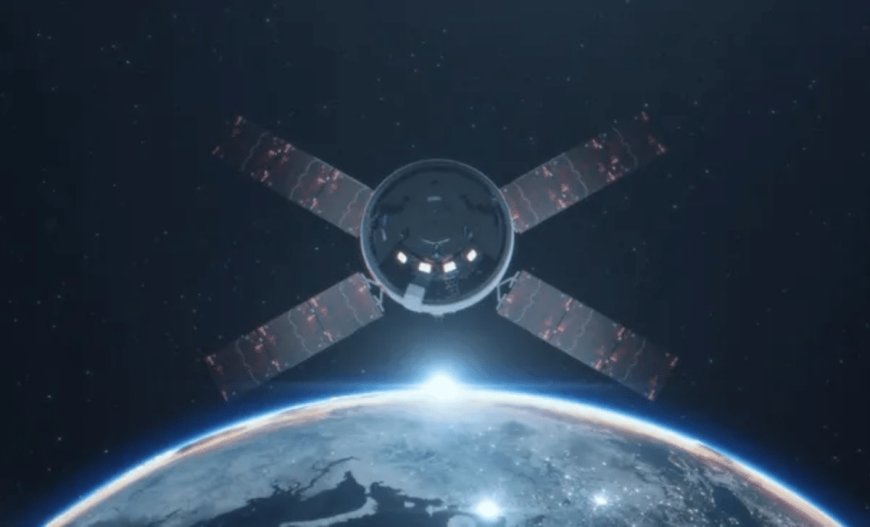
NASA’s Artemis 3 mission, once positioned as the agency’s long-awaited return to the lunar surface, is now facing mounting uncertainty after a major overhaul highlighted in a recent Space News report. The mission’s transformation into a complex low Earth orbit test flight, combined with emerging schedule delays, signals a pivotal moment for the Artemis program and its broader goal of reestablishing a human presence on the Moon. With multiple spacecraft, private partners, and untested coordination strategies involved, Artemis 3 is no longer just a mission, it has become a high-stakes systems test that could define the pace of lunar exploration for years.
A Mission Redefined In Low Earth Orbit
NASA’s decision to convert Artemis 3 from a lunar landing attempt into a low Earth orbit rendezvous mission marks a fundamental shift in strategy, reflecting both technical realities and programmatic pressures. Instead of heading directly to the Moon, the Orion spacecraft will now attempt to dock and interact with lunar landers developed by SpaceX and Blue Origin, effectively simulating the critical steps required for future landings.
According to Space News, this approach mirrors the role of Apollo 9, which tested lunar module operations in Earth orbit before the historic Apollo 11 landing. The challenge lies not just in executing each component, but in synchronizing them, launching multiple vehicles, aligning orbital mechanics, and ensuring seamless interoperability between systems that are still under development. Engineers must identify a shared orbital path and launch window, a logistical hurdle that grows more complex with each added variable. This redefined mission architecture introduces flexibility, yet it also exposes the program to new layers of uncertainty that did not exist under the original plan.

(Image credit: NASA)
Hardware Progress Meets Strategic Ambiguity
On the ground, tangible progress continues at Kennedy Space Center, where the Space Launch System (SLS) core stage for Artemis 3 has already been moved into the Vehicle Assembly Building. Booster segments are arriving steadily, and assembly milestones suggest that the physical infrastructure of the mission is advancing. The Orion capsule is also moving toward integration, with its crew and service modules scheduled for mating in the coming months. Despite this visible momentum, key elements of the mission profile remain undefined, including orbital parameters, mission duration, and operational sequences.
This disconnect between hardware readiness and mission clarity creates a paradox: the rocket may be ready before the mission itself is fully designed. Discussions are also underway about potentially flying SLS without its upper stage to preserve hardware for later missions, a move that could ripple across the Artemis schedule. Such decisions illustrate how engineering trade-offs are now directly influencing mission architecture, reinforcing the sense that Artemis 3 is still in flux despite its advancing components.
Spacesuits, Crews, And Critical Unknowns
Beyond rockets and spacecraft, Artemis 3 depends on systems that are even less mature, including next-generation lunar spacesuits developed by Axiom Space. The exact role these suits will play in the mission remains unclear, reflecting broader uncertainty about operational objectives. “We’ve provided the agency with a number of options” for testing the suit on Artemis 3, said Russell Ralston, senior vice president and general manager of extravehicular activity at Axiom.
“It would certainly be a valuable exercise, but we just don’t have the specifics at this time.” This ambiguity extends to the astronaut crew itself, which has yet to be announced. “I believe we’re not far away from announcing the Artemis 3 crew,” NASA Administrator Jared Isaacman said in an April 30 ABC News interview. “When you think about your timing, when you’re a year-plus out from a mission, that’s when you want to get them into training.”
The absence of a named crew underscores how fluid the mission timeline remains, as training schedules and operational readiness depend heavily on a stable launch date, something NASA has yet to firmly establish.
A Timeline Slipping Toward Late 2027
Schedule pressure is now one of the most significant challenges facing Artemis 3, with official targets beginning to drift beyond earlier expectations. “Our direction is no earlier than March, no later than June” of 2027, Chojnacki said of the Artemis 3 schedule. Yet more recent statements suggest that even this window may be optimistic, with internal assessments pointing toward a launch in the latter half of the year. “I’ve received responses from both [HLS] vendors, both SpaceX and Blue Origin, to meet our needs for a late 2027 rendezvous and docking, and test the interoperability of both landers, in advance of a landing attempt in 2028,” Isaacman noted during a House appropriations subcommittee hearing on April 27.
A delay into late 2027 would have cascading effects, making NASA’s goal of conducting two crewed lunar landings in 2028 increasingly difficult to achieve. The agency has outlined an ambitious cadence of missions spaced roughly ten months apart, but that timeline becomes harder to sustain with each incremental delay. Artemis 3 now sits at the center of this tension, acting as both a prerequisite for future landings and a potential bottleneck that could reshape the entire program’s trajectory.
Enjoyed this article? Subscribe to our free newsletter for engaging stories, exclusive content, and the latest news.
What's Your Reaction?
 Like
0
Like
0
 Dislike
0
Dislike
0
 Love
0
Love
0
 Funny
0
Funny
0
 Angry
0
Angry
0
 Sad
0
Sad
0
 Wow
0
Wow
0