



5 | Candace Owens Undone: Blame Game

NOTE: This series blends traditional reporting, cultural analysis, and firsthand reflection to offer coverage that is as fair as it is real. It’s personal, it’s political, and it’s only possible because of your support.
Start Here: Part 1 | Part 2 | Part 3 | Part 4
Thank You for subscribing. — Jessica Reed Kraus
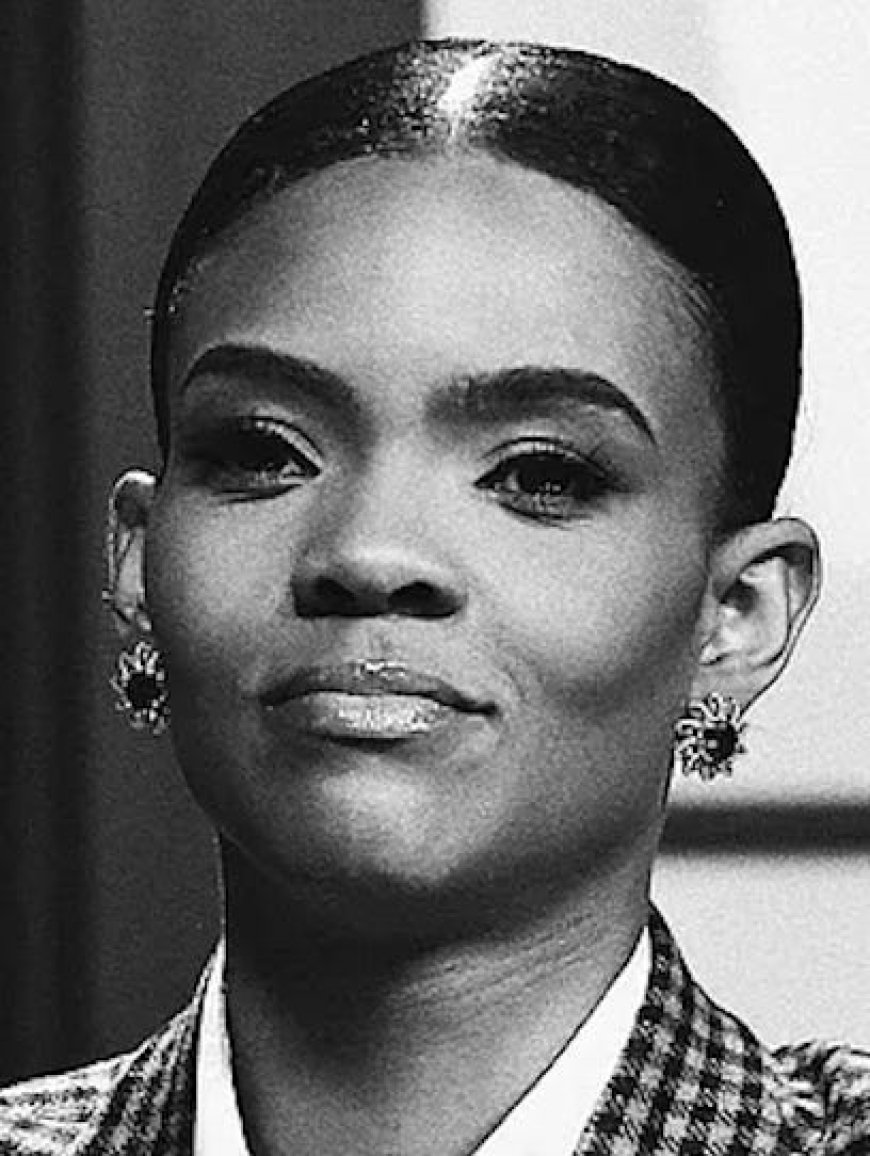
The what of Candace Owens is what’s easy.
She’s a political performer who tried on different personas before she became influential among far-right Republicans once Donald Trump rose to power. Her rhetoric about Israel fractured her relationships with more establishment conservatives and ultimately drove her, in 2024, into the wilds of independent media. There, her reckless practice of populating fantasy content with real human beings has attracted attention and legal drama. When I published part one of this series in January, that content featured associates of Charlie Kirk, who had been fatally shot months earlier in what Candace had begun to speculate may have been an inside job. Since then, her assassination-profiteering has grown sharper teeth. She’s sunk them into Erika Kirk, who now finds herself the star of a series that treats her as a suspect in the murder of her husband while the man charged with the crime appears in a Utah courtroom ahead of his trial.
It’s the who of Candace Owens that’s harder to know.
The more you document other people the less knowable people seem. Some people couldn’t tell you who they are. Others might tell you that existence is the ceaseless project of establishing new answers to the question as we undergo imperceptible changes all the time. What can be verified. Who involves soul and psychology. With all the information and insight in the world, the answer could only ever amount to an educated guess.
Candace Owens snapped at me in the Year of the Snake.
It was a leap year that spanned thirteen months in the lunisolar calendar, and its qualities sounded good. Renewal. Regeneration. Shedding what no longer serves you. In practice, though, it was a lot of pain even when I believed it was for the best.
It seemed appropriate that I found myself wounded by Candace in this period. Even more so when I considered the irony that a false claim about the Year of the Snake was what led her to unhinge her jaw in the first place to level false claims about me.
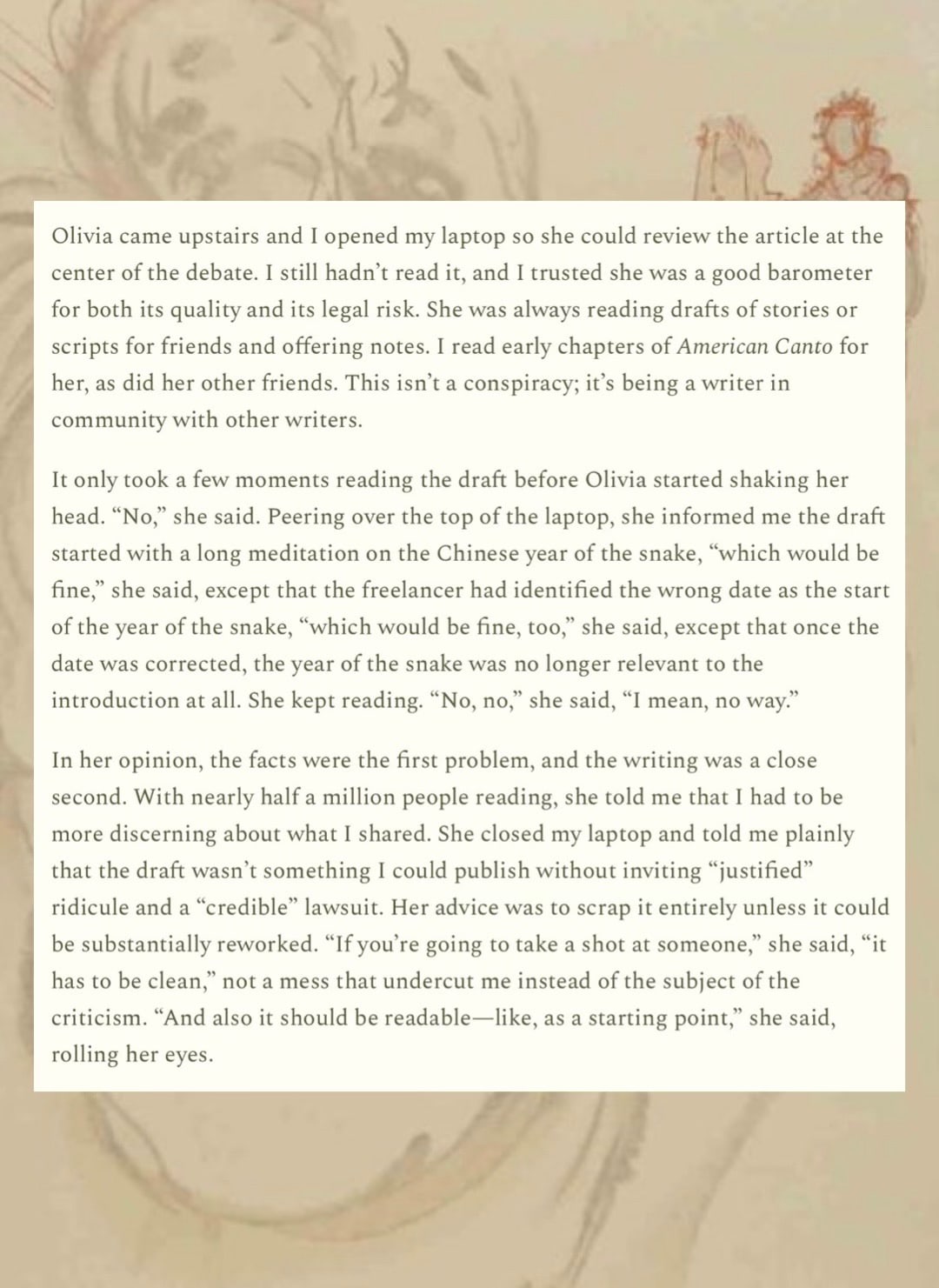
Last March, Olivia Nuzzi arrived to my office in Laguna Beach, where I asked her to read the draft of a story about Candace submitted by a freelancer, since I knew she would be a good judge of its integrity in fact and prose. I documented the scene in the third installment of this series:
You know what happened next.
Lies, harassment, slander, threats.
Why bother with evil? I asked myself that question as I continued working on this series. There is so much happening right now, events that involve entire industries, governments, and the human race itself:
Millions of documents circulate connected to Jeffrey Epstein and those with whom he associated, a fraternity with inordinate influence across the modern world. I have spent years on that story and still have more to say about it. My reporting on Epstein’s cellmate Nick Tartaglione—a man condemned to life in prison for crimes he insists he did not commit—continues, too. Elizabeth Holmes also remains incarcerated, separated from her young children despite her claims of innocence and persecution by Big Pharma. She’s locked up in the very prison in Byron, Texas where Ghislaine Maxwell idles as the world parses her communications. The ugliness of the internet is exceeded by the ugliness of the geopolitical landscape, as war in the Middle East grows more violent, and as fears are stoked that the conflict will only remain in the Middle East for so long. Meanwhile, there are few signs that new technologies will present solutions to old human problems. Instead, we are faced with accumulating suggestions that artificial intelligence will soon rival our own—if it hasn’t already. Mysteries multiply. Drone sightings. Airspace closures. An Arizona grandmother still missing.
Why spend so much time on one woman whose slander against me, in the grand scheme of things, is so small?


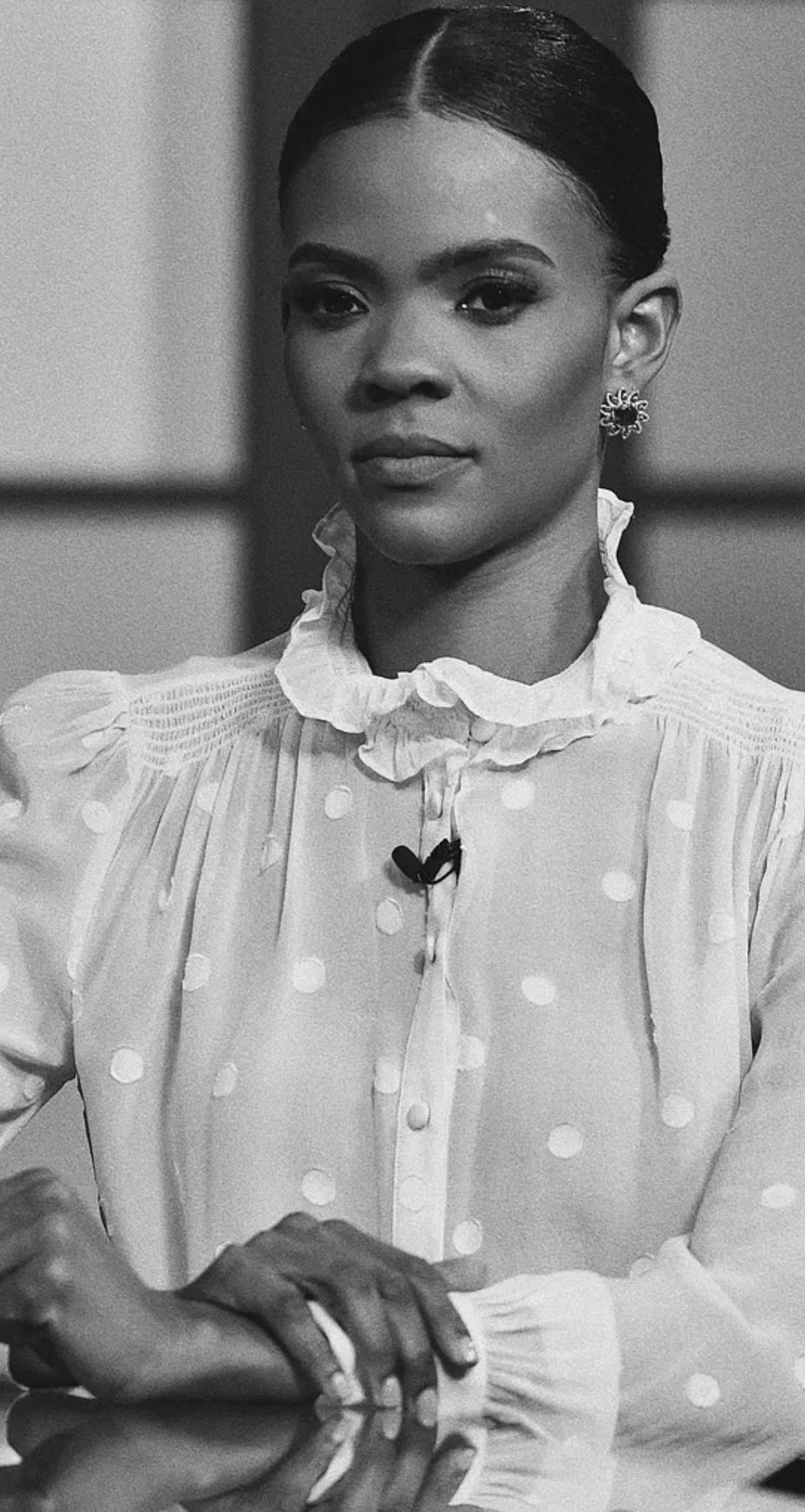

The long tail on the Year of the Snake reached its end and I considered those questions as Candace raised new ones about her latest object of scorn.
She capitalized on Charlie’s assassination to sow outrage and profit attention through an “investigation” that increasingly comes across as a vehicle to refashion professional disappointments and personal devastations into the heroic story of her crusade against evil. It started slow. She was, as she’s prone to say, just asking questions. She had a right to do so as an American and obligation to do so as someone who cared deeply about her friend. “Mrs. Erika Kirk” was how she referred to his widow then.
Within a few months, the pretense of polite concern was gone. Her circle of suspicion contracted smaller and smaller. She suggested not only that the official story of the murder might be fake, but that “Charlie Kirk” as we knew him might have been fake, too—his entire life and career a big false flag waving right in our faces for the entirety of his thirteen years as a public intellectual and activist. In her retelling of events, she robbed Charlie of his agency in order to portray him as a puppet, too ignorant to recognize how he was being utilized for evil, and too powerless to escape his matrix once he began to recognize the truth.
As of this writing, since Charlie Kirk was killed, she has released 79 episodes of Candace on the subject, eight of them from Bride of Charlie, her effort to raise, but almost never to answer, questions about his widow. The 79 installments, an average of about an hour-long each, have been viewed about a billion times on YouTube alone.
Candace has staged this still-unfolding spectacle as she fends off defamation claims related to another made-for-independent-media “investigative” series. Her 2024 battle with the president and first lady of France seems telling. Her efforts to get the case thrown out have thus far failed, meaning the conflict is headed, slowly, toward a courtroom—meaning that her actions in public today, even about matters that don’t relate directly to the Macrons, may be calibrated with that looming legal crisis in mind. Evidence that antagonistic tactics are simply her standard combat procedure, rather than rooted in any personal vendettas, could prove useful. She is just an aggressive pursuer of the truth, she could attempt to argue, whether her subject is a stranger and foreign dignitary or the widow of a deceased friend.
Back at my office in Laguna Beach, Olivia and I sat at the same desk where she read the story I never published nearly a year earlier. We talked about the strangeness of having a false version of yourself introduced to the world by someone unconcerned with fairness or openly seeking to inflict harm, the strangeness of watching those efforts succeed at considerable personal or professional cost, and the strangest part of all, facing the dilemma of whether or how to explain or defend yourself without legitimizing the very efforts meant to debase you.

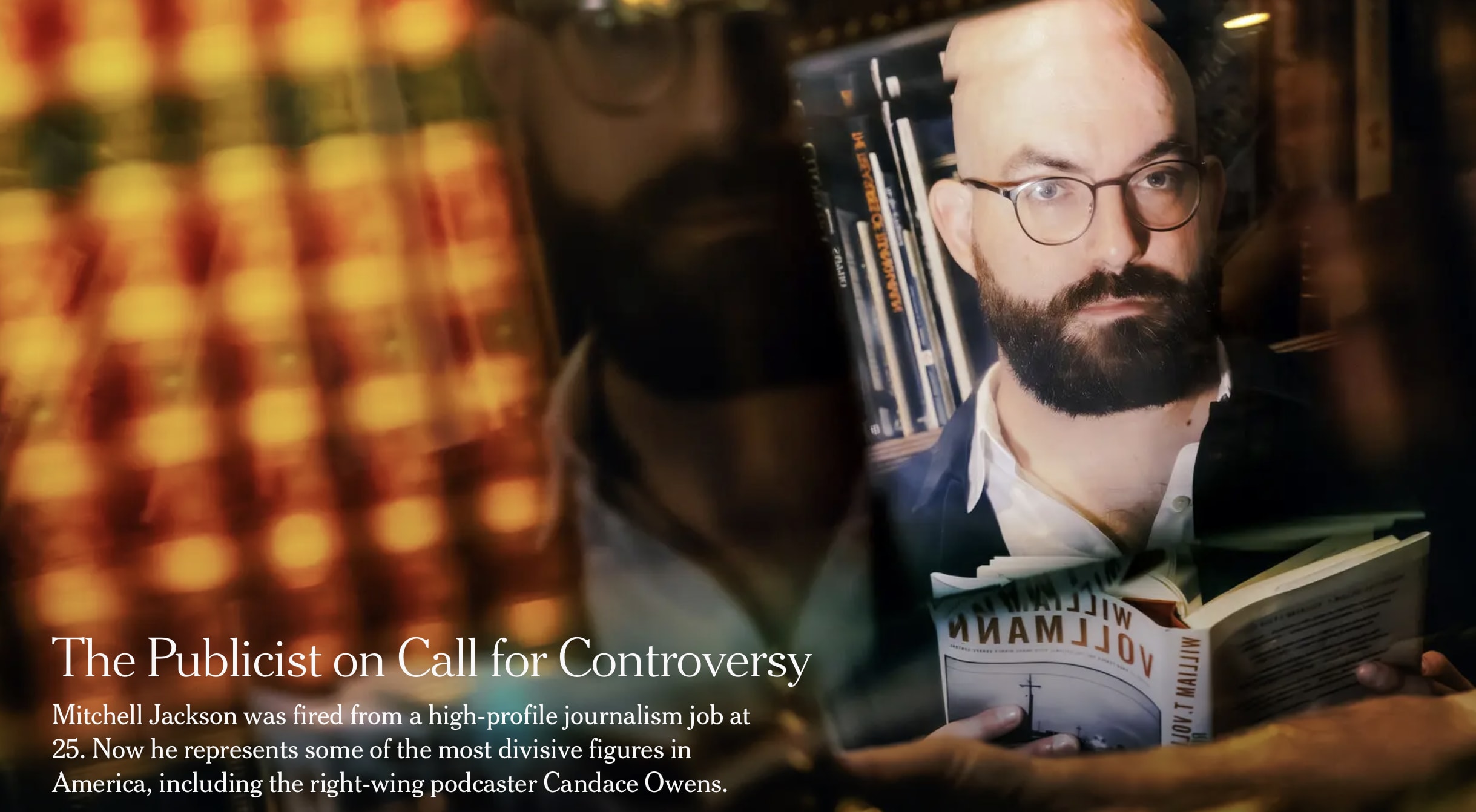
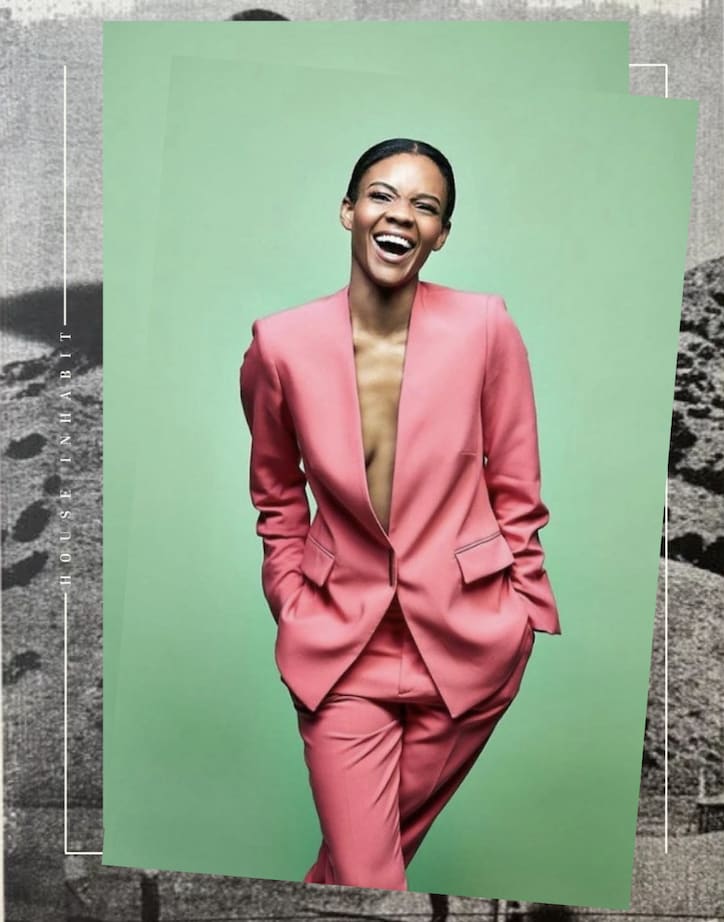
It’s an unusual subject to have any expertise in, and it’s one Olivia knows well. Not just because, according to Candace, she isn’t a writer whose career spiraled into scandal amid her entanglement with RFK, but a CIA or Mossad operative dispatched to secure blackmail on him so the two of us could control him on behalf of the allied states that secretly run the world, the Deep State and Israel. “American politics has been negatively polarized and tribal for as long as I’ve been writing about it. I’m used to incivility and I’m used to threats,” Olivia said. “But the threats prompted by her conspiracy about us were different, because they were defensive. It seemed these people believed we were an active threat—not just to her reputation but maybe to her safety.”
I thought about the words she spoke on camera that led to the threats and harassment directed at me, my family, and Olivia. Clean shot. The repeated use of both of our full names. The identifying details about the geography of our lives, not something I would have advertised to people who saw me as a predator rather than a human being whose minor children should be spared from online hate campaigns, and not something Olivia would have shared with just about anybody, since at the time only a few close friends knew she was living in a small West Coast beach town. Her verbiage was urgent and cinematic, the stakes set somewhere near life or death. She offered imagery of being hunted by the two of us through a jungle as we tried to secure our clean shot. The racial subtext was powerful, and the fact that she was, as she reminded her audience, eight months pregnant, only amplified the stark narrative of her victimization at the hands of the two of us and the evil masters we serve.

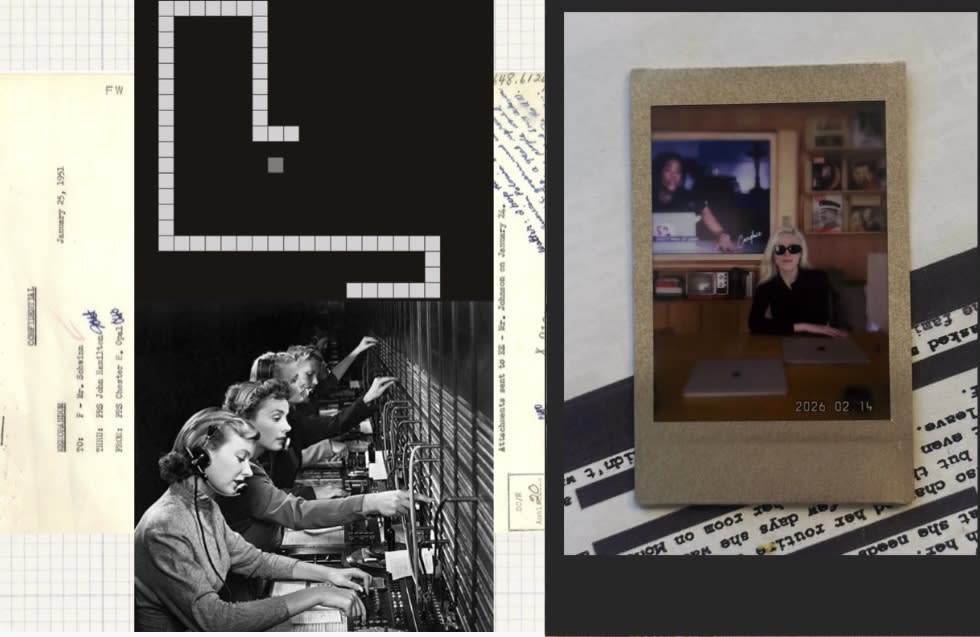

It hurt me emotionally and it hurt my reputation. It also hurt my business, which depends on trust. I struggled to process the experience and its aftermath.
I asked Olivia the question I had been asking myself: Why bother with evil? “My short answer is that we bother with evil because evil bothers good,” she said.
I asked what her long answer would be.
“It’s my view that when you’re cast here as a witness, someone who helps shape our consensus reality by interpreting the world through creative acts, your assignment is to move peacefully toward the greatest good against the current of any oppositional force, external or internal. For instance, the implosion of the life I led—I see now that it stemmed from misalignment. I had been moving through the world under the false impression that public and private acts were energetically different, that a public lie was corrosive, but a private lie was just my problem, within my custody, and that I controlled whether it reverberated beyond that realm. Energy doesn’t work that way. Spiritual wars are waged in cumulative microscopic battles. Every little thing matters.”
It was beginning to make sense.


I started to think my experience with Candace was not a small distraction from larger stories, but part of how I might better understand them. Chaos rules and distrust is rampant, and some see in that confusion an opportunity to shape reality to serve themselves, at great cost to the rest of us.

It may be the case that who we are is what we do.
And I can tell you what Candace Owens does. I can tell you what effect her actions have had on others, and how my reporting uncovered what appears to be private peril she has channeled into public hypocrisy. By giving voice to some of those burdened by their first-hand experience with corrosive lies Candace has told, I hope to release them—and anyone harmed by the culture of malice she perpetuates.
Anyone who inflicts this much pain is usually in pain themselves. Looking deeper into her past, it becomes evident this is typically the root of her projections.
The assassination of his legend and the reputation of his family continues to air on weekday afternoons and in viral clips that ricochet faster than their assertions and insinuations can be challenged. To move forward into the year, I had to part with what weighed me down. I’m grateful the snake’s time is up, but even more grateful for what it prepared me for. As the horse takes off running, I decided it was time to shed this for good.


It was hard to not take it personally.
Among her false claims about me, Candace implied that I am an alcoholic. Implied is a polite word for it.
These statements, made alongside other unfair and untrue allegations about me, were intended to degrade, demean, and discredit me. If I were intoxicated and out of control, then nothing I had to say about Candace could be taken seriously, and nothing I had to say about any other subject could be taken seriously either.
I inhabit the worlds I cover. That is not a pun on the name of my publication. It is the way I approach my writing. I exist not just among but with the subjects of my reporting, as fully as the access they grant allows. I go to parties. I spend time in homes. I attend weddings. I attend funerals. I go, I watch, I listen, I engage, and what those words come to mean, as they recur and accumulate, is that I participate in order to understand.
This is not the only way to do it, but it is an established one. The fact that I work this way does not make me unique among writers. Far from it. Others in this trade have done the same, sometimes to criticism, sometimes to acclaim. I am unaware, though, of instances in which a writer has been maligned as a ditzy drunk for the practice, though many writers, and many great ones, have been drunks. Fewer have been ditzes, but that quality has its place too.
Candace prefers a monologue delivered from her home studio, a prepackaged narrative condensed by a team and read from an invisible teleprompter.
My first reaction to Candace’s smear was acute hurt and humiliation. It felt terrible to be willfully misrepresented on a platform that reaches millions, and it felt terrible to read the harassment that flowed from that misrepresentation. Within the hurt was offense and a measure of anxiety. If she succeeded in her effort to tar me as out of my depth and out of sorts, it could damage more than my feelings. My writing often depends on the trust I establish with sources and subjects. What if they believed her claims that I could not be trusted, that I was not fully there? Within those feelings was fury too.


Many of Candace’s accusations about me fit neatly within her worldview. Israel, the great villain of her narrative, made it unsurprising that she wrote me into the script as an intelligence asset. But where did my alleged alcoholism fit? She had pulled away from politics, she told her viewers, because the closer she got to the center of things, the more she understood the fraud inherent in the scene. She cited the example of supposed adherents to “family values” who were often “drinking and drunk and sleeping with one another.”
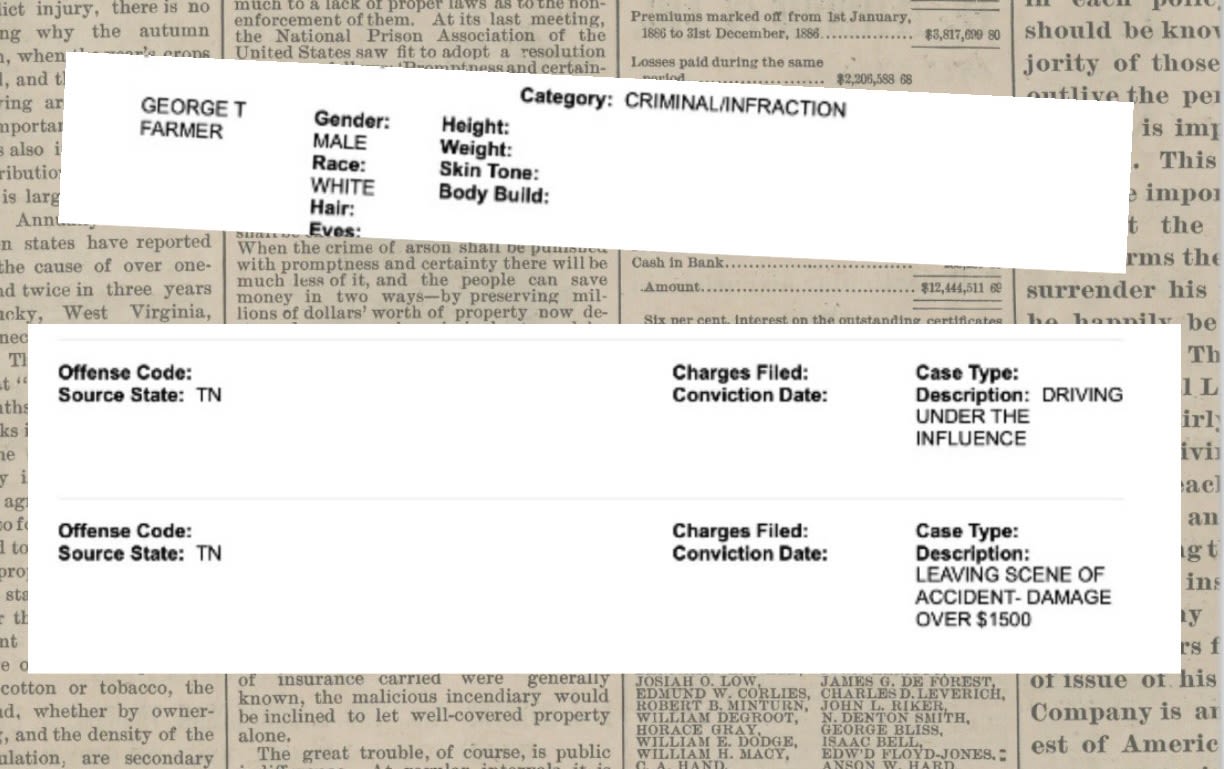
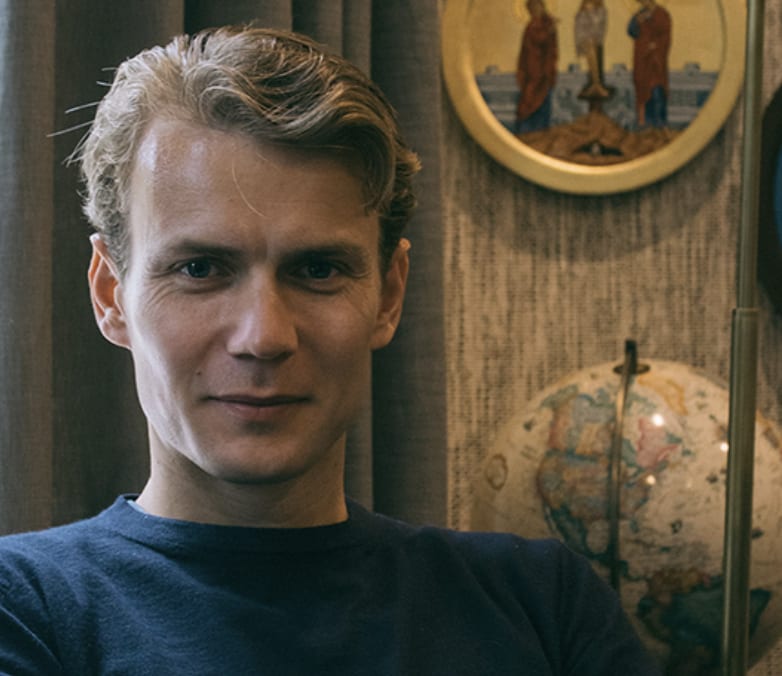
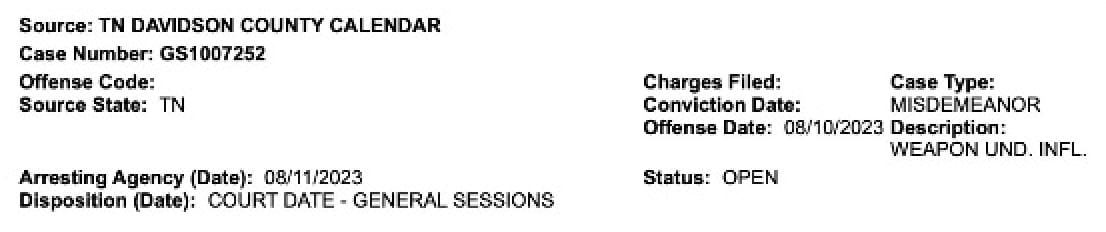
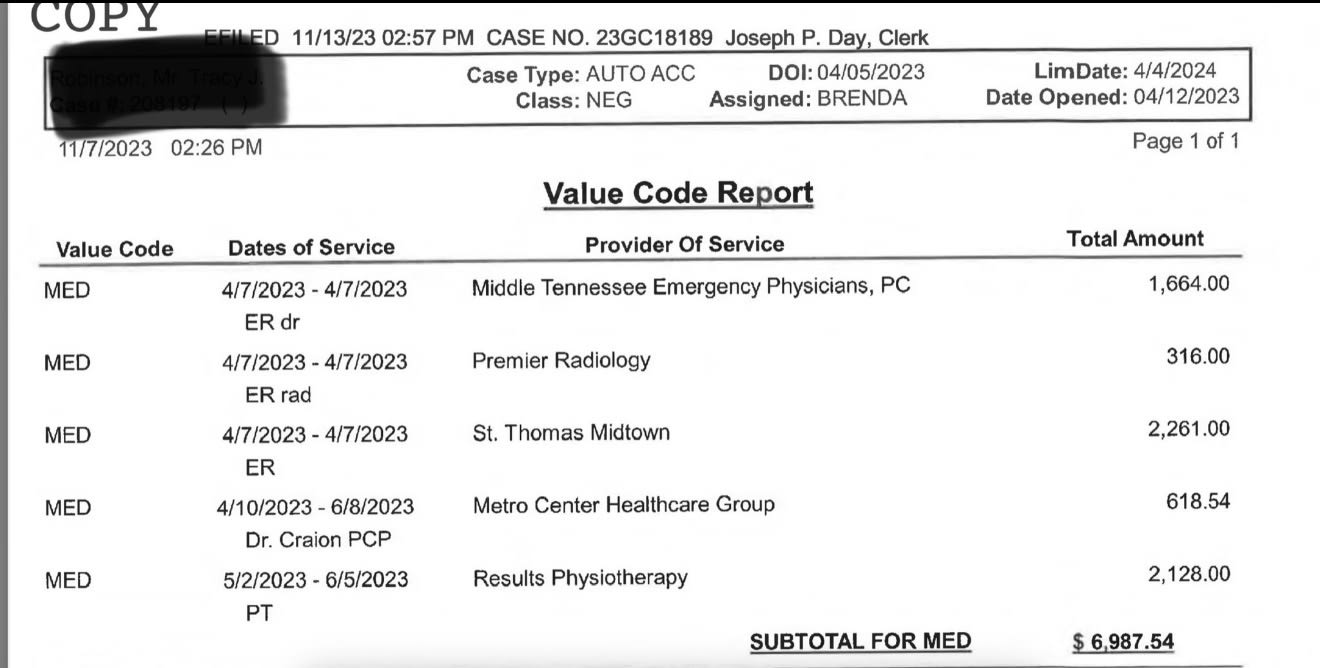
Months later, a potential clue appeared in the form of a Tennessee court record from 2023 involving a vehicle, a weapon, and the scene of an accident that had been fled. The report named a “George Farmer” and a “George T. Farmer,” but did not conclusively establish that the individual arrested was George Thomas Stahel Farmer, the man Candace married in 2019. The man in the document was white and male. His height and weight were missing. The birthdate listed was July 5, 1990. Public databases list different birthdates for the George Farmer Candace married: December 1989, December 1990, July 1989, and July 5, 1990.
Because he is a UK native who only became a dual U.S. citizen in 2025, establishing basic facts about his American records is not straightforward.
Some chatter about the report surfaced online. Laura Loomer posted about it in December. A friend of Candace and George, speaking anonymously, confirmed the individual named in the report was indeed George T. Farmer, but that the record had been “buried.”
This week, more information regarding George’s legal issues has surfaced. Court records were obtained by two sleuths on X.
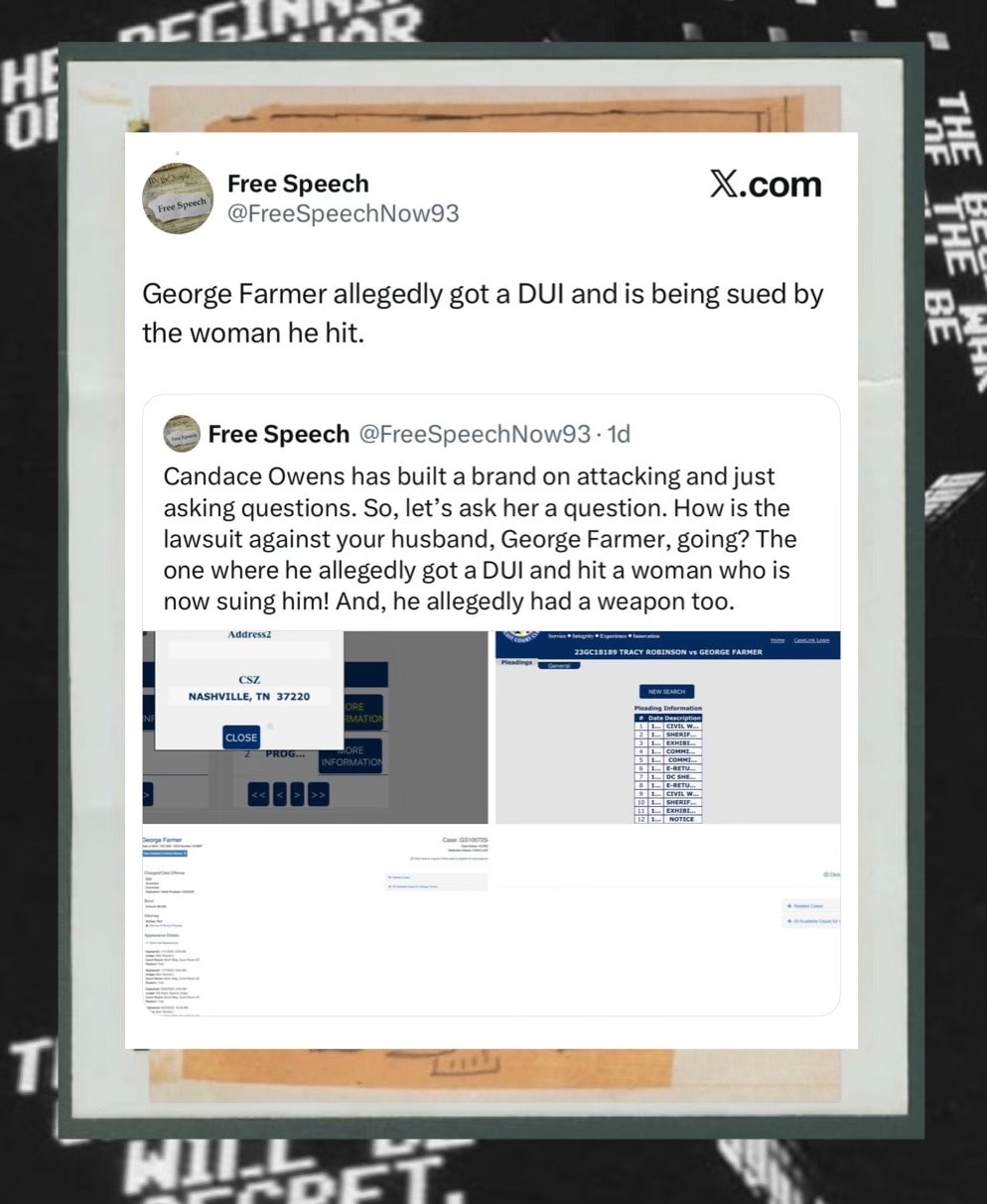
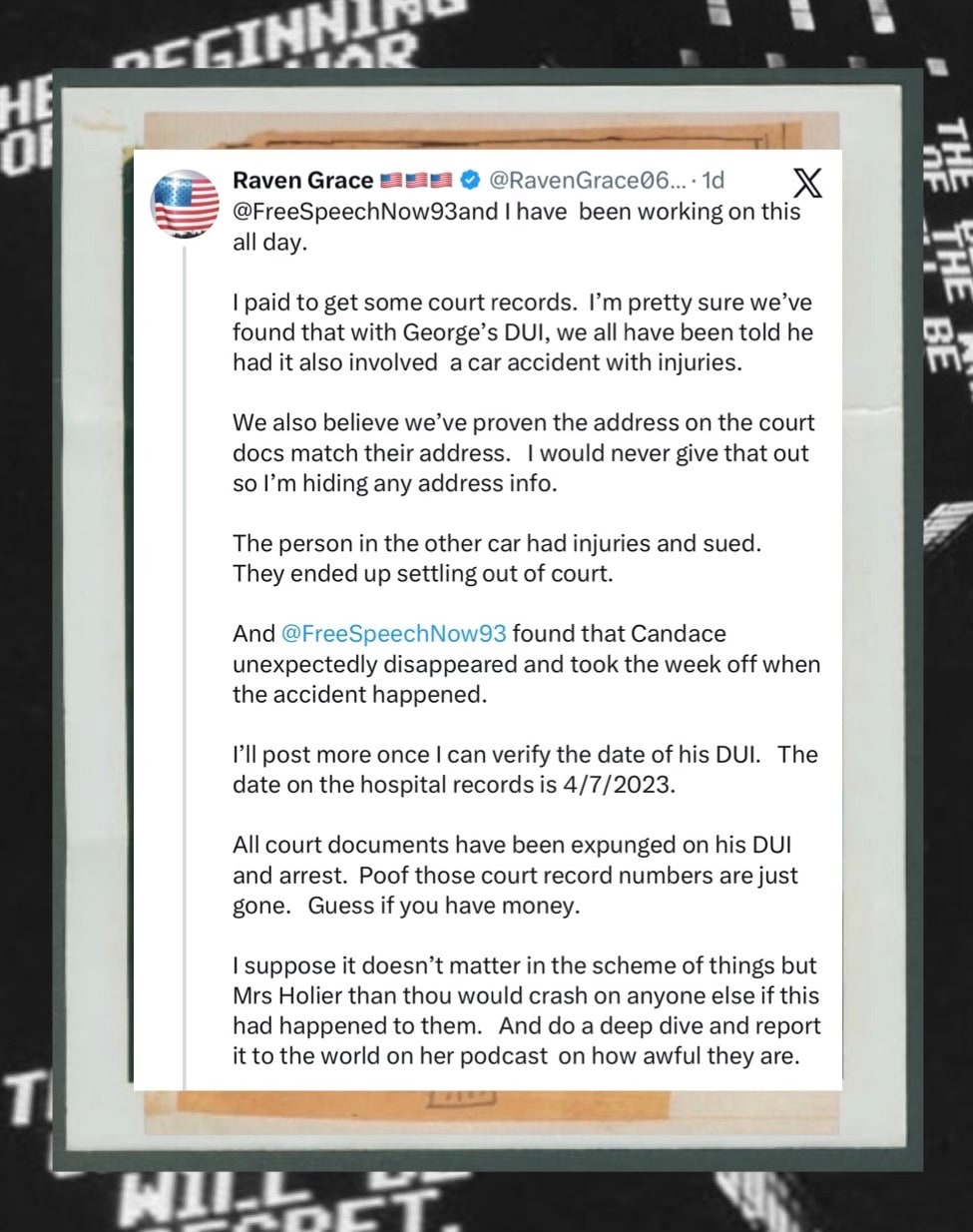
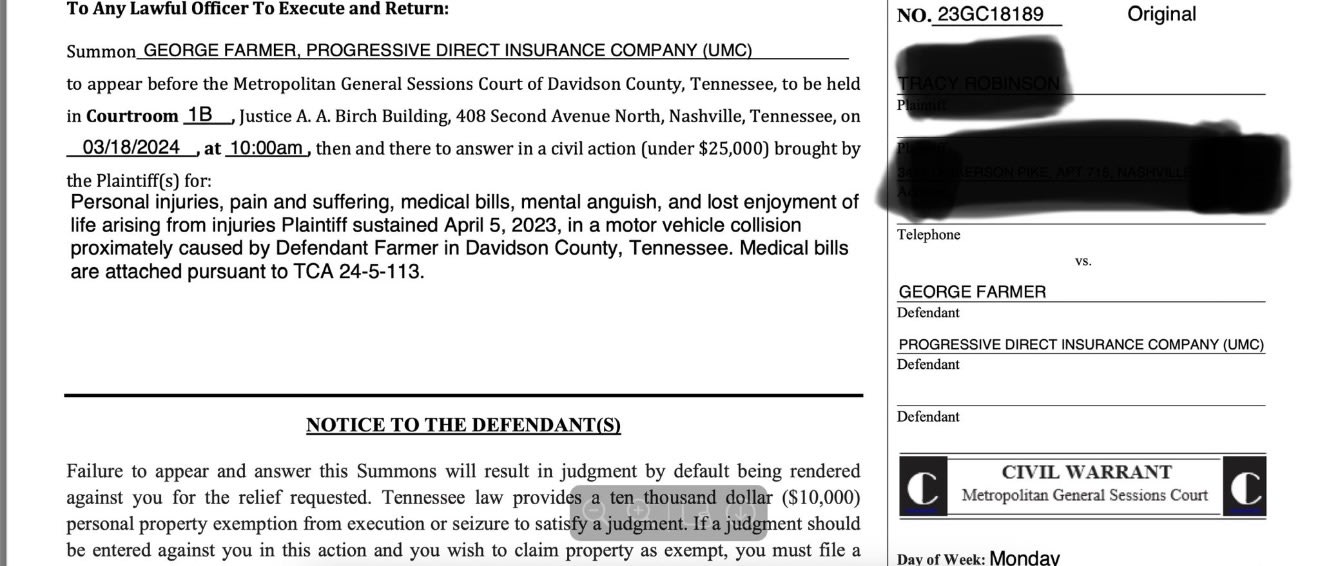
“Can you answer some questions about this? Was the accident your husband caused in 2023 a separate incident from the DUI and weapons charges he got that are now erased from the Tennessee government website?” one user asked.
Another replied to an older post, questioning visas. “This is a genuine question: Which visa program allows the son of a British Lord to move to America and influence our politics through his business ventures, and lets him stay even after being arrested for a hit and run and then blowing 3X the legal alcohol limit while illegally carrying a gun down the street?”
One screenshot shows a court date for a settlement hearing on 8/25/23, which would coincide with a medical claim being made four months prior. Because no settlement was reached, it proceeded to trial. In addition, the birthday of 7/5/1990 aligns with Candace saying they celebrated George’s birthday over the Fourth of July weekend.
Her scrubbing aligns with mounting turmoil. Around this time, Candace deleted everything from before early 2025, perhaps as a defense, hoping to cease examining her posts the way she examines others.
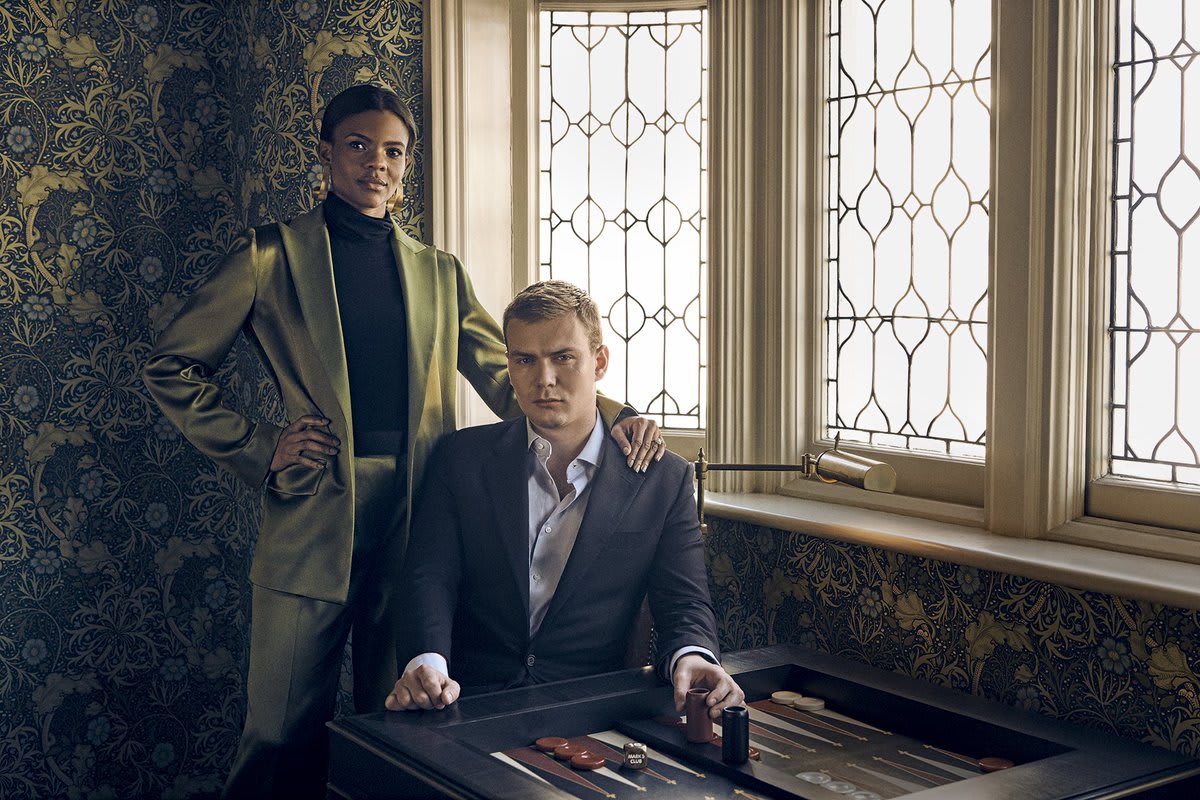
George Farmer or George Farmer?
Anonymous sources told me the DUI was strategically buried through legal maneuvering, and that his birthdate has remained deliberately elusive—making it difficult for sleuths to definitively tie the record to him.
“Technically—as it appears on file—he was never arrested, because the incident was sufficiently buried,” they explained.
In the course of my own investigation into her past, I learned that many were onto Candace long before questions about her credibility became a cause for viral sparring.
A shrewd producer and performer, Candace has always understood the value and the lure of drama. Sources who worked with her at The Daily Wire said staff often braced for offstage walk-offs. She had the largest studio on set, noticeably grander than those used by Brett Cooper and Ben Shapiro, who would at times roll his media cart into her space to film segments of his show. She also had a reputation for running late, occasionally leaving live audience members waiting in a neighboring parking lot for an hour or more before being welcomed onto set.
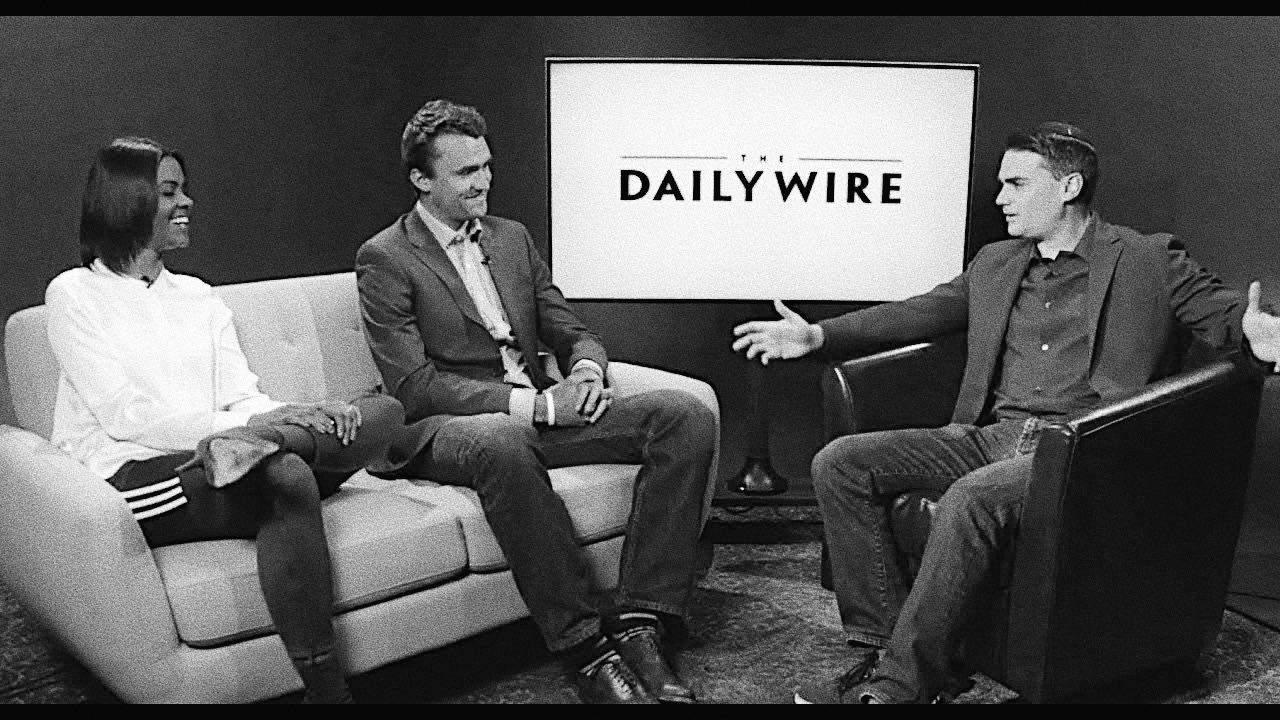
According to two people who requested anonymity, she was respected and even revered, “like a celebrity on set,” but not well liked beyond that persona. They described her as cold and oddly paranoid, a trait that surfaced during her introductory meeting with a team The Daily Wire had assembled to ensure her immediate success on the platform. She came off as accusatory, one person present that day recalled. The energy shifted as it became clear she was neither as grateful nor as enthusiastic as they were about building something ambitious together, but instead suspicious of the newly formed team and their intentions.
Later, staff were instructed not to look her in the eye when she entered the set. Her requests extended to specific straws to sip water from. One former staffer laughed while recalling the quiet panic that set in if the straw was misplaced before she arrived.
Candace was a skilled performer. She speaks on camera with unhedged confidence. Her scripted monologues were polished, but she was irritated by, and disinterested in, reviewing meticulously fact-checked outlines prepared for her, according to those who spoke to me on the condition of anonymity. She often dismissed the reference material entirely as she pursued the most sensational angle, sometimes bending facts and strategizing ways to provoke guests in order to produce a viral clip.
When I asked one former colleague to describe her in a single word, he didn’t hesitate. “Instigator,” he said.
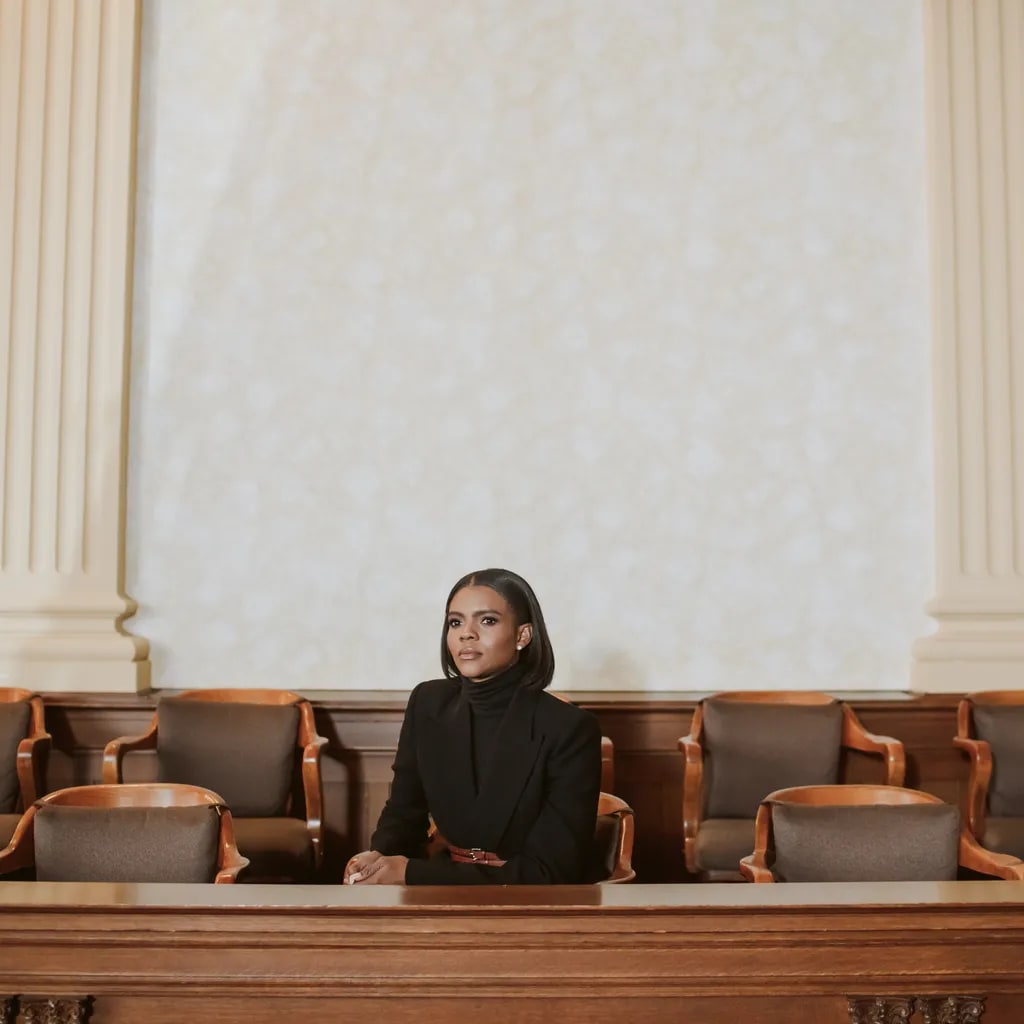
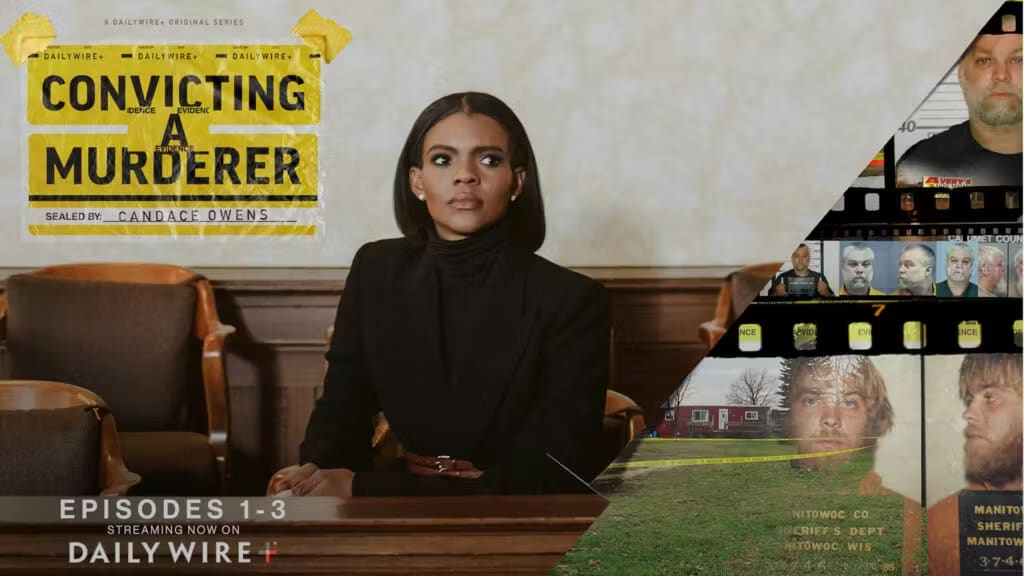
Her pattern is predictable in hindsight. She secures the stakes before she strikes as a matter of standard practice. Hypersensitive and volatile, she responds to any perceived threat quickly, forcefully, and often unfairly, while presenting herself as the victim. That pattern has followed her since she entered public life.
In 2016, she announced her plans to combat cyberbullying with a startup, SocialAutopsy. “The age of technology and social media has slowly disintegrated individual accountability, the consequences of which are devastating,” she said at the time. Her goal was to raise $75,000. Instead, the contradictory premise of an anti-harassment doxxing database stirred up an esoteric online culture war and ultimately killed the project before it could formally launch.



By 2018, as far-right populism surged across the Western world, Candace Owens was touring the United States promoting BLEXIT, a campaign urging Black Americans to abandon the Democratic Party. Backed by Turning Point USA, BLEXIT was pitched as a political awakening, with Candace as the face of the movement. Donor money flowed quickly, but behind the scenes some supporters began questioning whether it was persuading voters at all.
An early skeptic was Republican commentator and congressional candidate Kim Klacik. She told me she agreed with many of Candace’s political arguments but questioned whether the strategy was working.
“I asked my pollster what the numbers showed,” Kim said.
“He said, ‘Well… nobody actually BLEXITted.’”
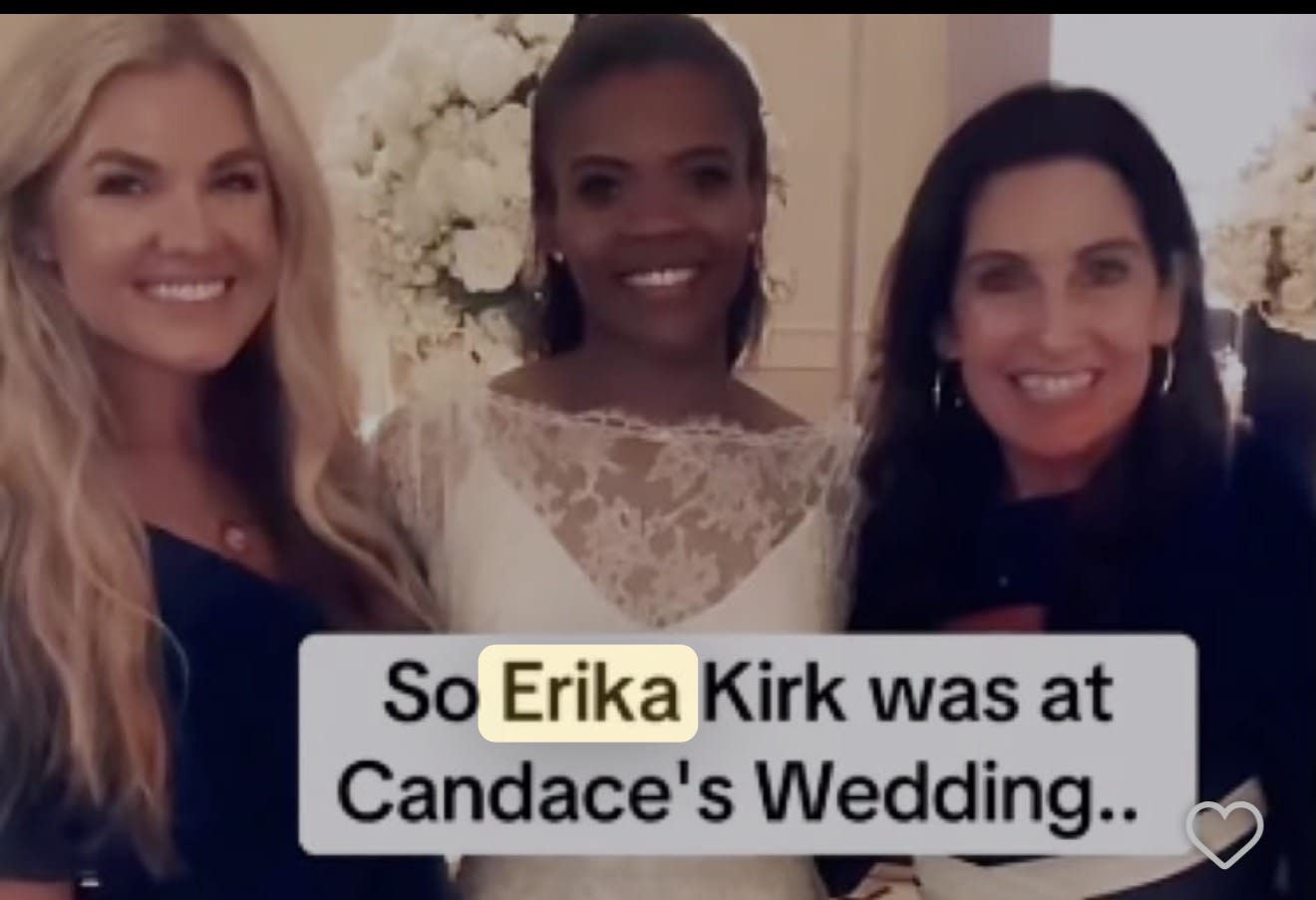
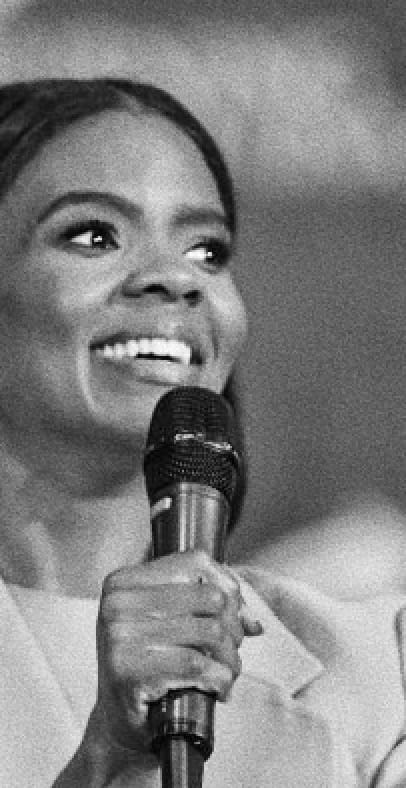
Kim said she initially tried raising concerns privately. In her view, the issue wasn’t the premise of the movement but the delivery. Candace’s confrontational rhetoric, she felt, was alienating the very voters the campaign hoped to attract.
“We shared the same donors,” Kim told me. “From what I understood, people were reaching out to her about it, but she didn’t seem to care. When I looked at the financials and realized they were more than a million dollars in the hole, it started to make sense. She wasn’t worried about losing donors, even as people at BLEXIT were getting laid off. It felt like their livelihoods didn’t matter. Like nothing mattered except her.”
Financial filings show BLEXIT rose and fell quickly. In 2019, the organization reported $873,697 in revenue against $188,219 in expenses, leaving a surplus of roughly $685,000. Donations surged the following year. By 2020, BLEXIT reported more than $7.4 million in revenue and ended the year with $3.6 million in net assets.
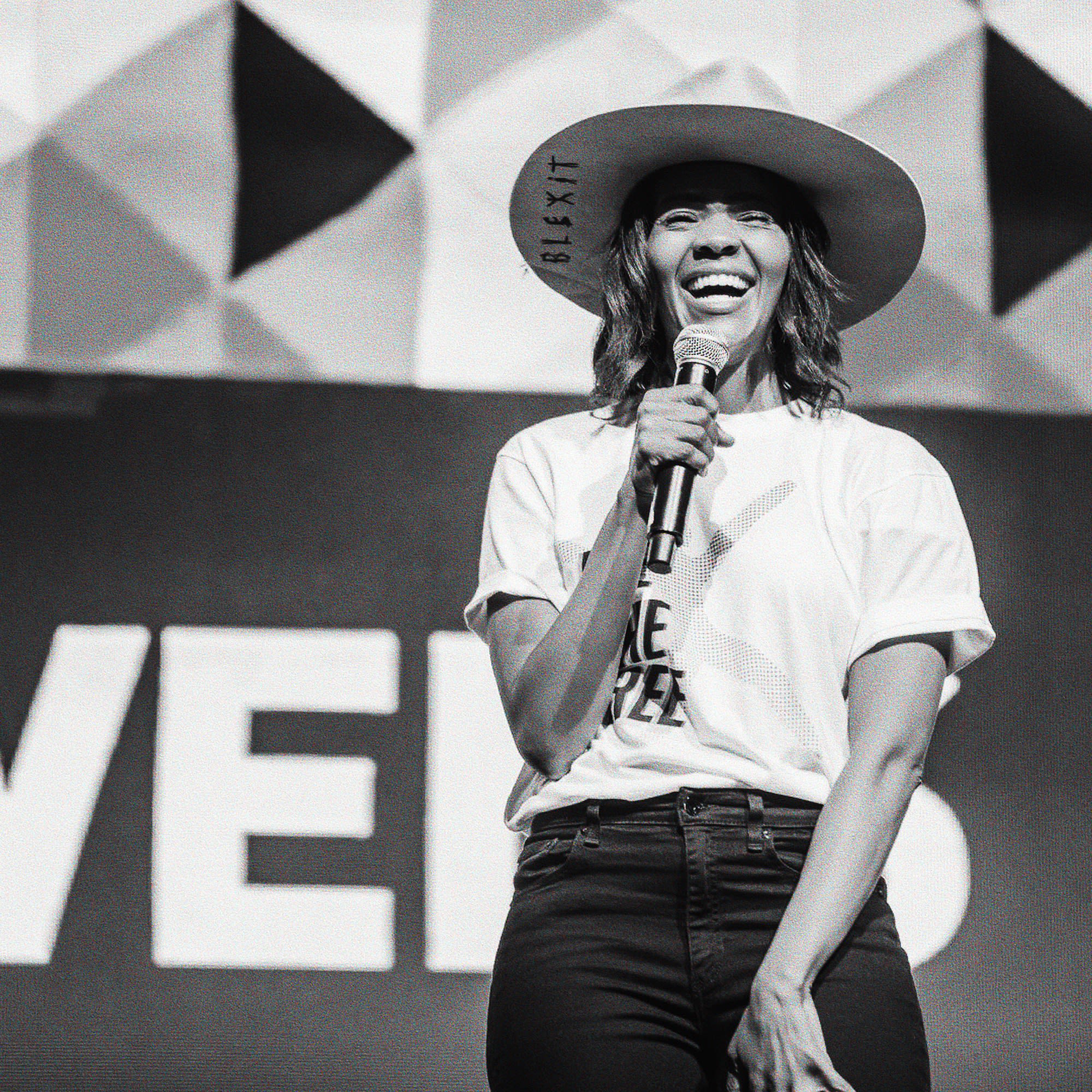
But the trajectory soon reversed. By 2021, the organization was running deficits, spending more than it raised. Losses continued through 2022, and by 2023 revenue had dropped to $274,538 while expenses exceeded $1.3 million, leaving the group with no reported net assets in the same year it ultimately merged with Turning Point USA, according to nonprofit filings reviewed by ProPublica.
According to multiple sources familiar with the organization, Candace frequently traveled to events on privately chartered flights, with travel expenses paid through the group.
The tension between Candace and Kim eventually spilled into public view when Kim criticized Candace on Twitter over her stance on the Juneteenth federal holiday. In a now-deleted response, Kim suggested the issue was “classism rather than racism” and accused Candace of having a “lack of engagement with Black people.”
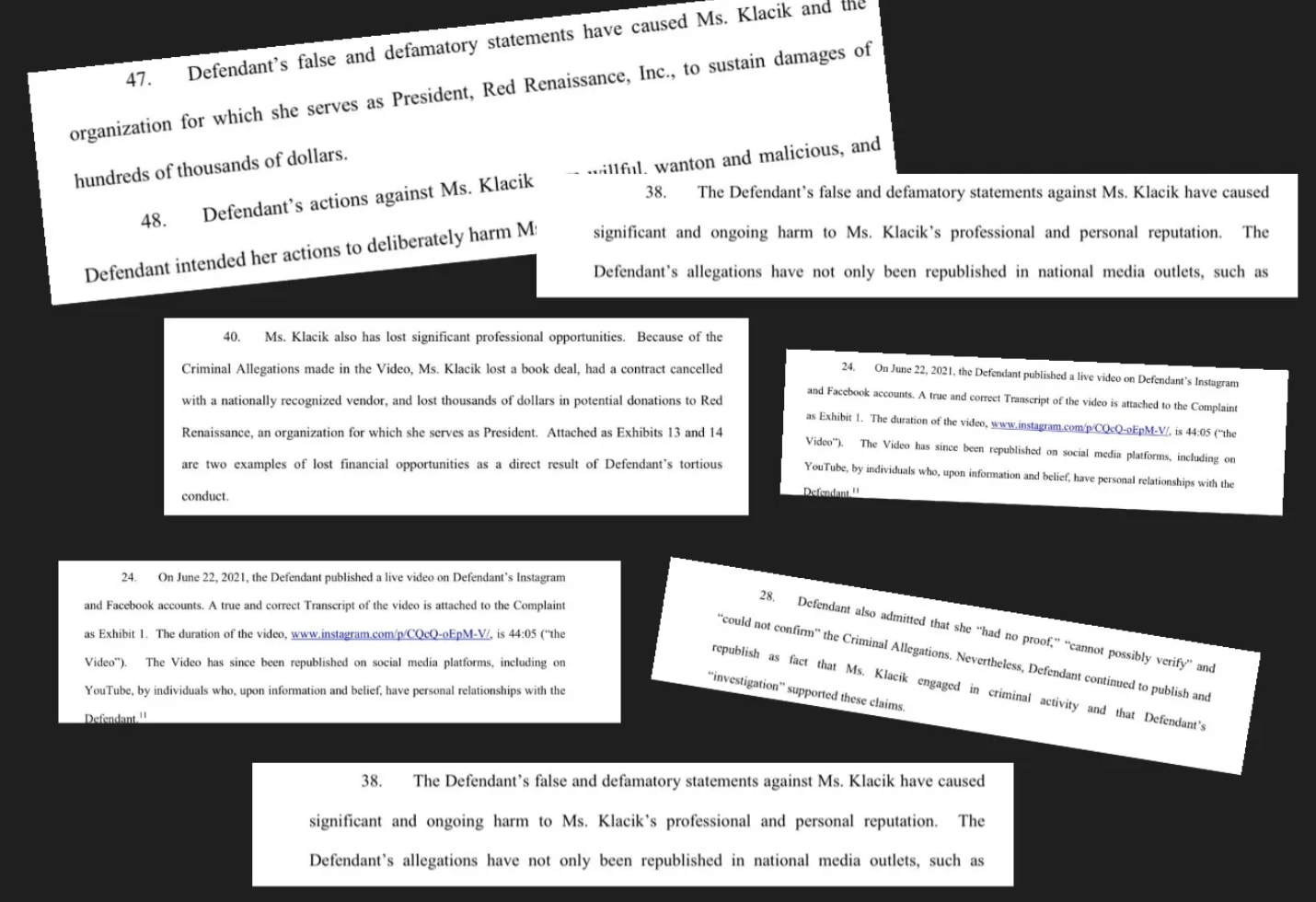
From there, the dispute escalated quickly. Kim accused Candace of perpetuating cancel culture. Candace responded by calling Kim “a fake and hilarious person.” Soon after, Candace released a 45-minute Instagram video leveling a series of accusations about Kim’s background. In the video, Candace claimed Kim had previously worked as a stripper, hired a Democratic Party operative for her congressional campaign, and was involved in what she described as “money laundering, tax fraud, and campaign fraud.” She also alleged that Kim’s husband owned a strip club.
“She was enraged,” Kim recalled. “She said, ‘I was waiting for you to say something.’ It’s the same thing she later said about Erika Kirk. ‘I was waiting for Erika to respond.’”
“I kept thinking there’s no way Charlie doesn’t know this about her,” Kim said, referring to Turning Point founder Charlie Kirk. “And the same with Ben Shapiro. But with Ben, it felt like they were just excited about how much money she was bringing in. After her Black Lives Matter documentary apparently pulled in millions, the Daily Wire deal started to make more sense.”
As the feud escalated, Candace began digging into Kim’s private life and circulating claims about her ex-husband.
“If you look up my ex-husband’s name online, it shows he’s the principal of one of these strip clubs,” Kim explained. “But he’s a CPA. His name shows up on filings for lots of businesses. She took that and ran with it, calling him a strip club owner.”
“He’s Ukrainian, very private, not a public person at all,” Kim added. “And he was furious. Absolutely livid.”
At the time, Kim says the two were privately separated, something the public did not know.
“She was blowing up my personal life while we were already dealing with things behind the scenes,” she said. “It was wild.”
Kim attempted to confront the accusations publicly.
“I told her, let’s go Instagram Live. Ask me anything,” she said. “But she wouldn’t do it.”
Instead, Kim says Candace insisted any confrontation take place on her own show.
“She only succeeds when she can completely control the environment,” Kim said. “The narrative, the angle, everything. That’s why she won’t face any of us live in our own words.”
The dispute escalated further when Candace accused Kim of serious criminal misconduct involving stolen campaign funds and drug use.
“She said I was on drugs. That I used campaign money to buy cocaine.”
Kim says the allegation came from an anonymous source Candace refused to identify.
“She kept saying, ‘I don’t want to reveal my source,’” Kim said. “Later we learned it was apparently a random dancer from the Gold Club. She claimed this happened during the campaign, but the clubs were closed because of COVID.”
To counter the accusation, Kim took a drug test and posted the results publicly the next day.
The dispute eventually spilled into civil court in Nashville, where Kim filed a defamation lawsuit.
“We were there for six hours,” she said. “It was awful.”
According to Kim, Candace frequently consulted her husband during breaks in the deposition.
“She kept calling George during the breaks to ask how to handle things,” Kim said. “The whole thing was a disaster.”
Ultimately, Kim says her attorneys advised her to drop the case. As a public figure, the threshold for proving defamation was high, and the financial burden even higher.
“My attorneys told me we could keep going,” she said. “But it would probably cost a million dollars, and we still might not win.”
Afterward, Candace publicly framed the outcome as a victory.
“She tells everyone she won,” Kim said. “But the truth is I simply couldn’t afford to keep fighting.”
The fallout lingered long after the lawsuit ended.
“It was awful. I was in tears for days,” Kim said. “People were attacking my daughter, saying CPS should come take my child because I was on drugs.”
According to Kim, Candace’s supporters began filing complaints with the Federal Election Commission, triggering a forensic audit during the Biden administration.
“Every time they called the FEC, my lawyers had to respond,” she said. “My accountants had to respond. We were getting hit with legal bills every single week because everything had to be documented.”
Eventually, the investigation concluded.
“The FEC released its forensic audit report and found no wrongdoing, not with my campaign, not with my PAC, Red Renaissance,” Kim said. “I have the file. It clearly states there was no wrongdoing.”
But the public narrative never corrected itself.
“She never fixed the record. Never.”
“If she had been right about me, I would have been in prison like George Santos. These were serious federal accusations. She accused me of felonies, even human trafficking. And her fans just ate it up.”
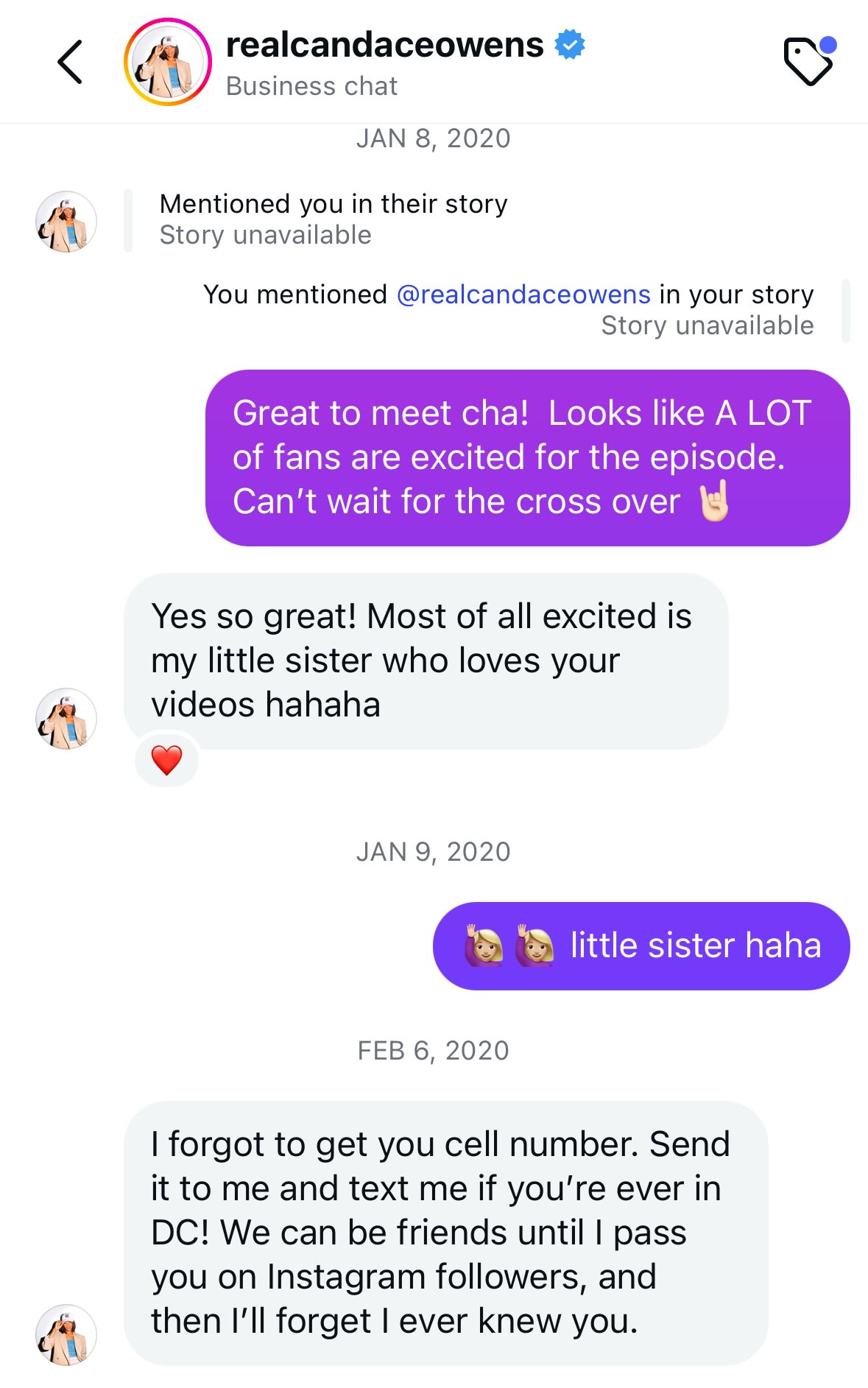
Before Kim Klacik, Nicole Arbour found herself in Candace Owens’ crosshairs. A Canadian comedian and media personality Owens once admired, Arbour said she had initially been invited onto Candace’s PragerU show when Owens was still establishing herself on the platform. According to Arbour, Owens reached out personally, telling her she was a fan and would love to have her on the podcast. The interview itself went smoothly. “I was doing comedy, and that’s what she was interviewing me about,” Arbour told me. “I was very anti–cancel culture. I’m all about saying whatever you want as long as it’s funny. Who cares? That’s the vibe.” But one comment from Owens stuck with her. “I remember something she said that struck me as weird,” Arbour said. “She told me, ‘I want to do what you do. I just want to be a contrarian. It seems like all you have to do is say the thing that isn’t what most people think, and it goes viral.’” After the taping, Owens followed up with a direct message suggesting they could remain friendly, at least for the time being. “She said we could stay friends until I surpassed her in followers,” Arbour recalled. At the time, Arbour said she laughed it off. “I thought it had to be a joke.”
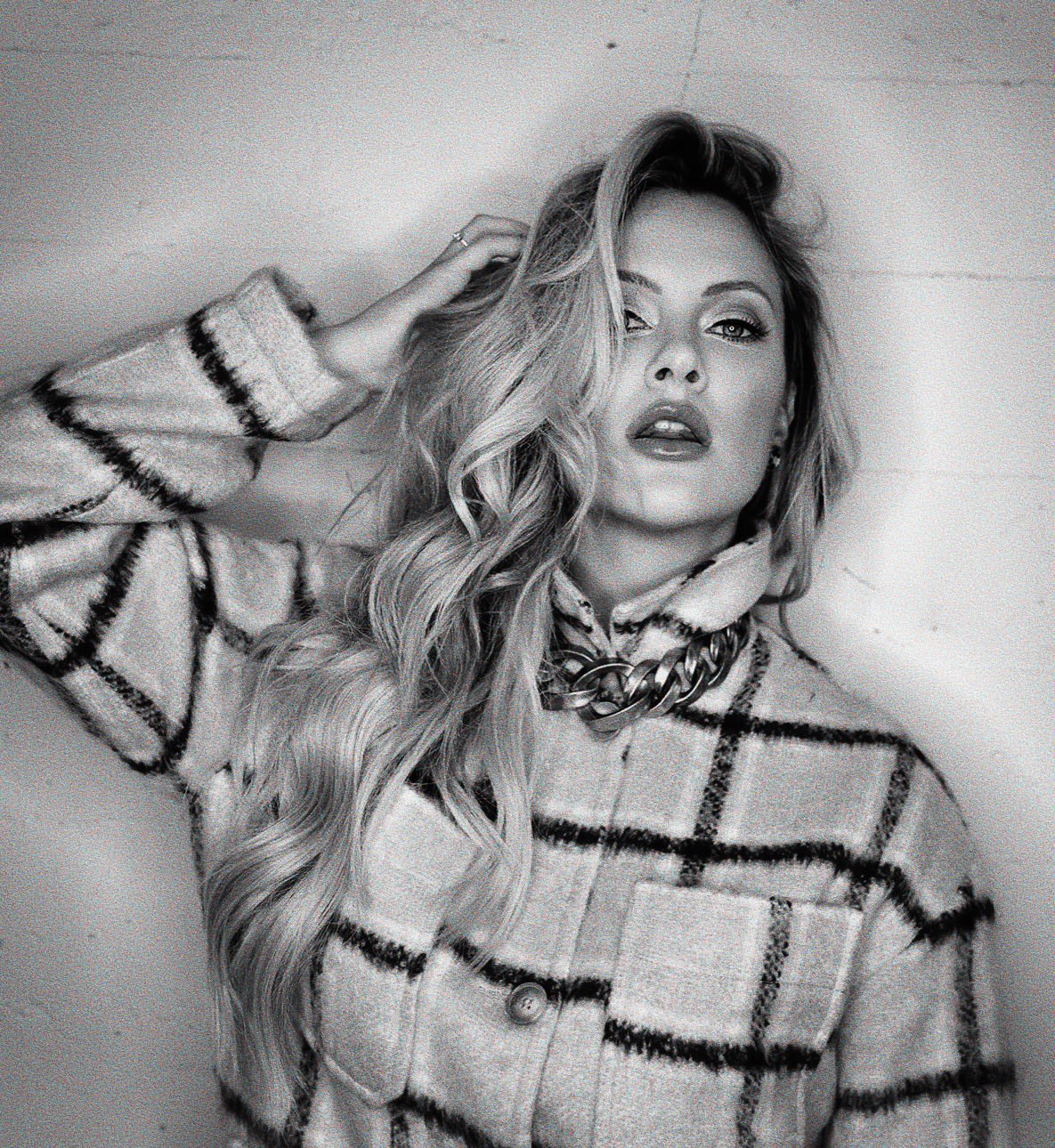
They stayed in touch. Nicole offered to help if Candace ever needed guidance with social media or production infrastructure, and over the years the two shared occasional phone calls, maintaining what Nicole describes as a casual industry relationship that she considered a friendship. That was her miscalculation. People who knew Candace during that period describe someone intensely driven and highly ambitious and whose relationships were often opportunistic. Some said they believed she did not, or could not, maintain friendships that were unrelated to her professional goals, and shared recollections of social engagements at which the guest list seemed to reflect few and shallow relationships.

At one point, Candace reached out about a new series she was developing at The Daily Wire. As Nicole remembers it, the concept was pitched as a The View-style panel show where she would appear alongside Candace and two or three other women. The two discussed ideas and creative direction, but a few weeks before filming Candace called with an update. The format had changed and the network had decided there would be just one star: Candace Owens.
“She told me, ‘They want to make me the Oprah of the Right,’” Nicole said.
Nicole says she took the news in stride. “I was like, cool, all good. I’m cheering for you.” As consolation, Candace invited Nicole to participate as a regular contributor on a panel segment on the program.
When Nicole arrived to tape the first episode, however, the atmosphere surprised her. What had been described as a lighter, funnier alternative to The View felt, in her words, “mean and dark,” particularly on the subject of Cardi B.
“It wasn’t funny,” she said. “There were no jokes. It was just mean girl jabs.”
Nicole told me she has no problem joking about public figures, it’s part of comedy, but the tone struck her as unusually harsh.
“I’ll make jokes about artists,” she explained, “but I’m not just sitting there tearing someone down. I felt like I was standing with the mean girls at school while she screamed at someone she didn’t like, and I was just supposed to back her up. It was very, very strange.”
As the episodes aired, Nicole says she began noticing bits she had written during early development conversations appearing in segments on the show. She had never been hired as a writer or formally brought onto the team, and at the time she brushed it off as odd, but not serious enough to raise a dispute.
The permanent fracture came later, during Candace’s campaign against Chrissy Teigen, when she urged conservatives to pressure retailers into dropping Teigen’s product lines. “She wanted people calling Target saying they wouldn’t shop there,” Nicole said. “And I was like, no. We’re supposed to be the opposite of that.”
Nicole responded on Twitter without naming Candace directly, posting, “Cancel culture is for bitches.” At first, it appeared to be a simple philosophical disagreement. Then, she says, the tone shifted.
“She flipped a switch,” Nicole told me. “She was screaming at the top of her lungs.”
The intensity felt disproportionate. Nicole suggested they debate the issue live, believing the disagreement could be handled openly. Candace agreed. But minutes after emailing Nicole’s manager about scheduling the debate, Candace posted publicly that Nicole was refusing to participate.
“She sent the email two minutes before posting that we were nonresponsive,” Nicole said. “My manager was at church. Suddenly I’m the one backing out.”

By the time the logistics were clarified, the format had shifted from a one-on-one debate to a panel. Nicole says what followed was something else entirely.
“It wasn’t a debate at all,” she said. “She put two people between us and another on my other side. It was four on one.”
At one point, a clip of Nicole was played out of context, framed to suggest she supported bullying.
“Which literally wasn’t it at all,” she said.
As the exchange escalated, Nicole says Candace abandoned the substance of the argument.
“I’m debating the topic and she won’t debate the topic,” Nicole told me. “She just keeps screaming and making things up.”
When Nicole began pushing back, she says Candace turned the conversation personal.
“She started naming my stalkers on air.”
These were men Nicole had previously confided to Candace about, individuals with documented histories of harassment.
“Humans don’t act like this. That’s not a thing,” Nicole said. “These aren’t random people. They have a history. She knew I was literally terrified of them.”
According to Nicole, Candace named the men anyway, then “sat there with that smug look like, ‘What? What’s the problem?’” Nicole says she told her it was gross, especially given that she was actively working with victim services to distance herself from one of the men, someone who believed they were in a relationship.
What unsettled her even more, she says, came next. Candace suggested she could play a recording of one of their phone conversations.
“She’s like, ‘Can I play it? Nicole, can I play it?’” Nicole recalled. “And I’m like… did you record our phone call? The one from last night?”
Nicole says Candace implied she had been recording their private conversations.
“That’s when I realized she had recorded everything.”
What unfolded on set that day, according to one source present, was deeply uncomfortable to watch.
“It’s one of the worst things I’ve witnessed in all my media years,” the source told me last month.
Another Daily Wire staffer later reached out to Nicole in tears to apologize. But by then, the damage had already been done. The footage circulated online and, according to Nicole, the segment was live-streamed to individuals who had been stalking and harassing her. Nicole also says that while Daily Wire later edited the names of the men out of the segment, Candace repeated them on her own live broadcast.
To make matters worse, Nicole says she was effectively barred from responding. Because she had active legal cases involving the men, her attorneys advised her not to comment publicly in ways that might jeopardize those proceedings. She was instructed to issue only a brief explanation for her departure from the show, not a broader defense of her reputation. With her safety the priority, Nicole says she felt forced to remain silent while Candace’s version of events spread largely uncontested.
Candace soon released a video accusing Nicole of fabricating rape allegations and arguing that false accusers must be exposed. The fallout, Nicole says, was immediate. Death threats intensified. The stalking escalated. She hired armed security, relocated, and watched professional opportunities begin to disappear.
Months later, Nicole says she noticed that elements of her earlier investigative work on Black Lives Matter’s donation structure appeared in a Candace Owens documentary, presented without attribution. She says Candace had not previously been aware of concerns surrounding the organization’s financial transparency until Nicole raised them and shared her early findings, including information that had gained traction after being reposted by Brandon Tatum. Nicole says portions of that work were later edited out of her PragerU appearance and subsequently reappeared, reframed as Candace’s own analysis on The Daily Wire.
“She accuses people of what she’s guilty of,” Nicole told me. “She always goes after reputation. It’s the same game over and over. I tried to tell people in 2021 that this is who she is.”
In Nicole’s view, Candace has repeatedly turned on prominent figures within the conservative movement itself.
“She went after Tomi Lahren. She went after Steven Crowder. She went after The Daily Wire. Jordan Peterson. Ben Shapiro. Turning Point USA. Kim Klacik. Donald Trump,” she said. “It’s a hit list. She wants to take down influential conservative voices.”
Nicole Arbour in her own words

Her bombastic style had reach across the globe.
In 2019, when 49 people were killed in shootings in two New Zealand mosques, Candace was cited by one of the gunmen in his manifesto as an influence on his radicalization.
“…The person that has influenced me above all was Candace Owens. Each time she spoke I was stunned by her insights and her own views helped push me further and further into the belief of violence over meekness. Though I will have to disavow some of her beliefs, the extreme actions she calls for me are too much, even for my tastes,” he wrote, according to reports.
In response, Candace was blasé.
“LOL! FACT: I’ve never created any content espousing my views on the 2nd Amendment or Islam. The Left pretending I inspired a mosque massacre in...New Zealand because I believe black America can do it without government handouts is the reachiest reach of all reaches!! LOL!” she said. “HAHA OMG you racist Leftists are taking your racism and crazy to a whole new level hahah. ‘Black people don’t have to be Democrats’ now means...mosque shootings in New Zealand? This clearly won’t stick but damn if I won’t grow #BLEXIT highlighting your sheer desperation.”
The Daily Mail located her grandfather to ask him about her reaction to the tragedy and her unlikely tie to it. “This is not my granddaughter’s behavior,” he told the tabloid. “Why would she be laughing at it? That doesn't seem proper. She is a religious person and we taught her. She has family all over the world. Members of our family and her grandmother's family are all over the world in many nations. We just don't do that. We're not that type of people… I know how she was raised and the things we taught her. And no, that's not our character. We had a lot of influence on her life as a child and we try to be close to our grandchildren.”

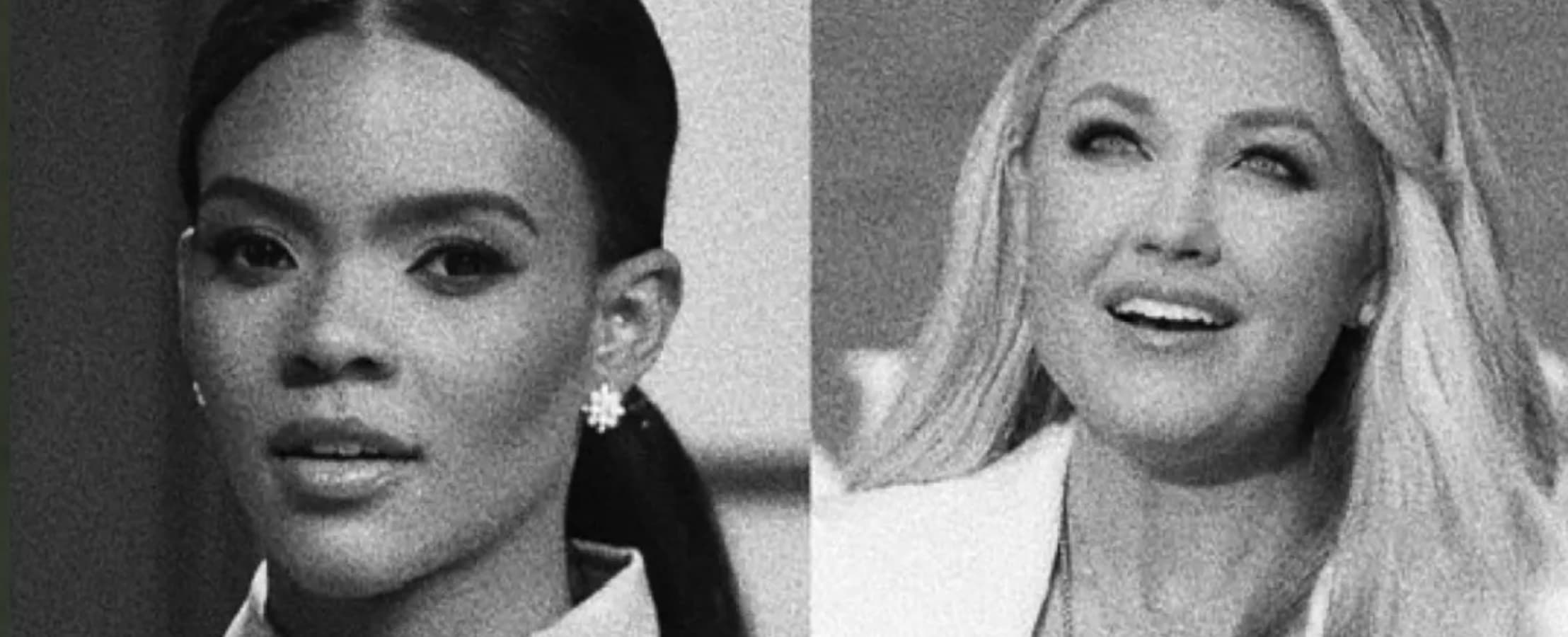
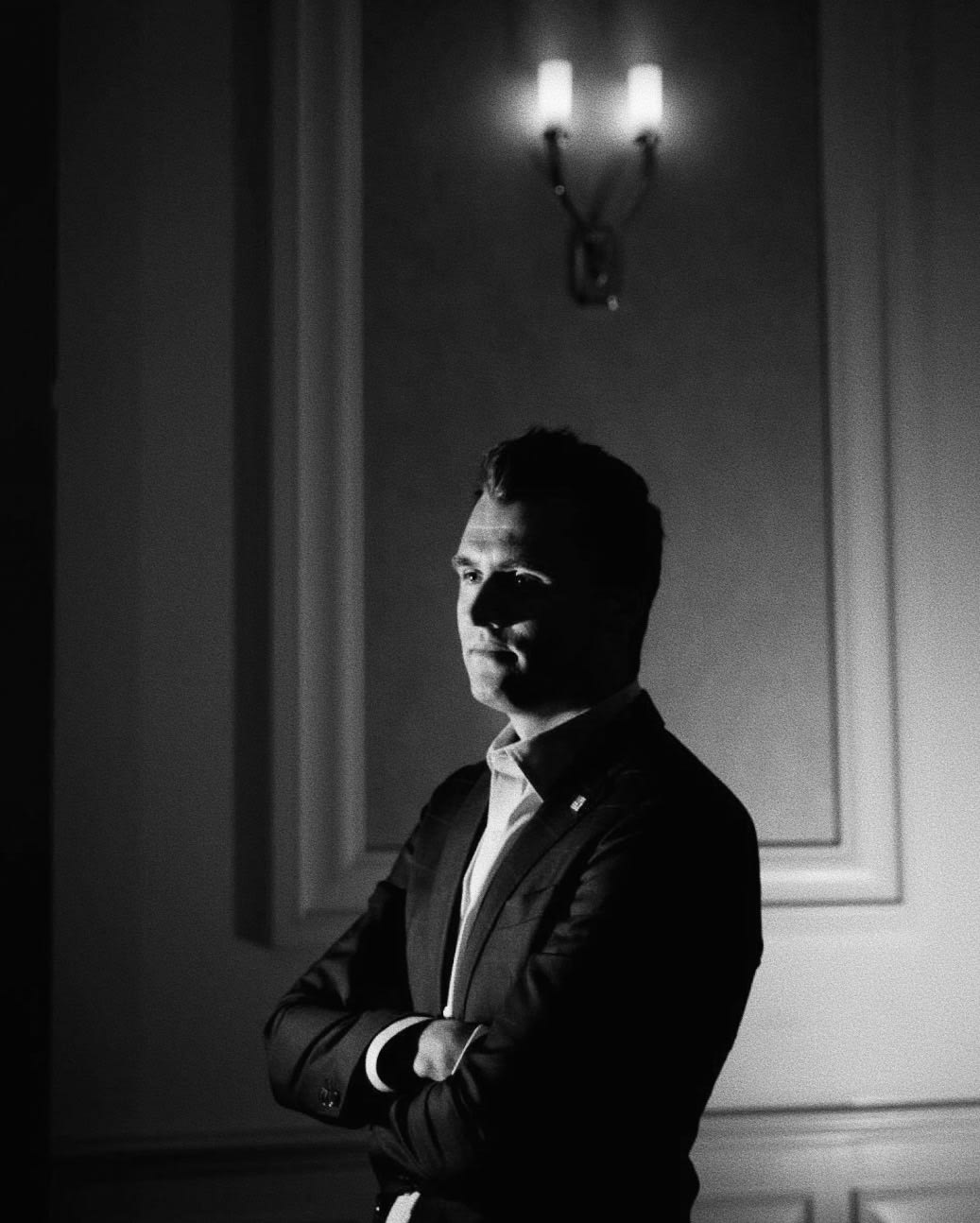

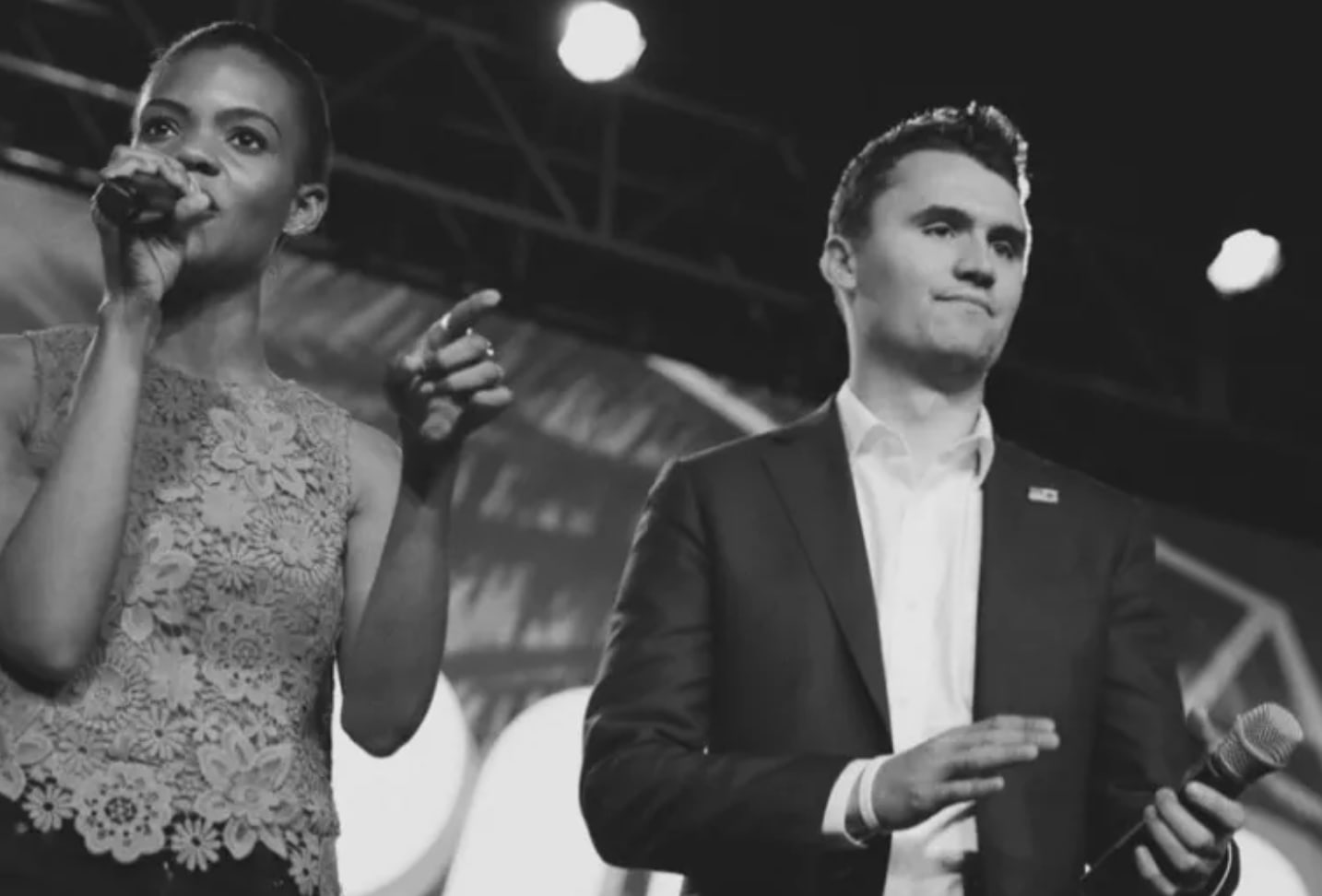
“Charlie and me,” she said. “Me and Charlie…” “Charlie was by my side…” “We were happy warriors…” “Charlie always had my back and I always had his.”
In the immediate aftermath of the assassination of Charlie Kirk, Candace Owens first established her credentials so that she could affirm her overwhelming authority to speak of his public and private life and its real meaning. The two of them had been a pair. They were partners. They were deeply bonded. They shared goals and ambition and work ethic. She spoke of him with familiarity, referring to his habits and who he was behind closed doors. How he packed his suitcase. Even how he slept.
This was September 11, one day after the murder, and Candace seemed sincere. He had been much more than her friend of eight years. He was the other half of the puzzle piece that clicked into place with hers, fusing their forces into one powerful whole. “I was the culture, Charlie was the politics.” Yin and yang. “Charlie needed more culture,” she said, “and I needed to learn more about the rules of politics.” Together they were better. Together they were complete.
That she cried was understandable. In retrospect, though, it seems telling that she made a point to tell viewers she had cried, the same viewers who would have presumably seen it themselves, as though she wanted to make sure they understood how dramatic the moment had been. “Well, that has never happened before,” she said. “I guess we could say Charlie broke the internet one more time.”
It was subtle at first but nevertheless unmistakable: Charlie Kirk’s death was, in this way, somehow about Candace Owens. And if that was not apparent to others yet, she would make it so, and to accomplish this, whether it was deliberate or just an unintended effect of her pure-hearted pursuit of the truth, she would narratively sideline anyone whose proximity to Charlie presented an obstacle to her status as the most important woman in his universe.
“His wife, Mrs. Erika Kirk,” is how she first referred to his widow, her voice softer then. But her compassion for Erika soon shifted into doubt. Doubt hardened into judgment. Judgment curdled into open hostility. At times, the hostility began to sound like something closer to paranoia. Eventually, she called for law enforcement to treat Erika as a murder suspect. “Erika should be dragged into a police precinct,” she said. “Erika needs to be questioned.”
“Let me just tell you how God works,” Candace said. She had become interested in Erika’s time as a real estate agent. Erika received her New York real estate license around the time she met Charlie, she noted, which she found strange, since she remembered being told Erika worked in fashion when they first met, and her work for the Corcoran Group had gone unmentioned.
As she explored this part of Erika’s life, Candace said she came across a video posted by an amateur sleuth on the same subject. The sleuth noted what he described as a suspicious coincidence: the president of the Corcoran Group appeared in the Epstein Files. For anyone in need of legally sound ways to be paid for illegal services, the sleuth suggested, real estate is a convenient business.
The video had been posted on TikTok and explicitly directed at Candace during the same period she was researching the topic. Algorithms predict and pander by design. Your recent behavior determines what you see next, and the odds of encountering content tied to your interests rise even higher when the content tags your account. But Candace said she was not “a TikTocker” and could not remember how she first saw the video. Maybe someone sent it to her. The how was not important, she added, because she was certain about the why: It was divine intervention. God wanted her to have this information.
“I just feel like” is a phrase Candace often uses before sharing an inflammatory theory for which she has weak evidence or none at all. She would have viewers believe she is referring to powerful intuition. In reality, it functions as a legal hedge. If she is merely expressing feelings rather than making statements of fact, she can never technically be wrong. She invites viewers to help her, asking anyone with information about Erika to send tips and issuing an open call for former classmates to get in touch. Who is Erika Kirk? Candace shows little humility about the enormity of that question. She trusts what she feels, and she feels that Erika is not who she seems.
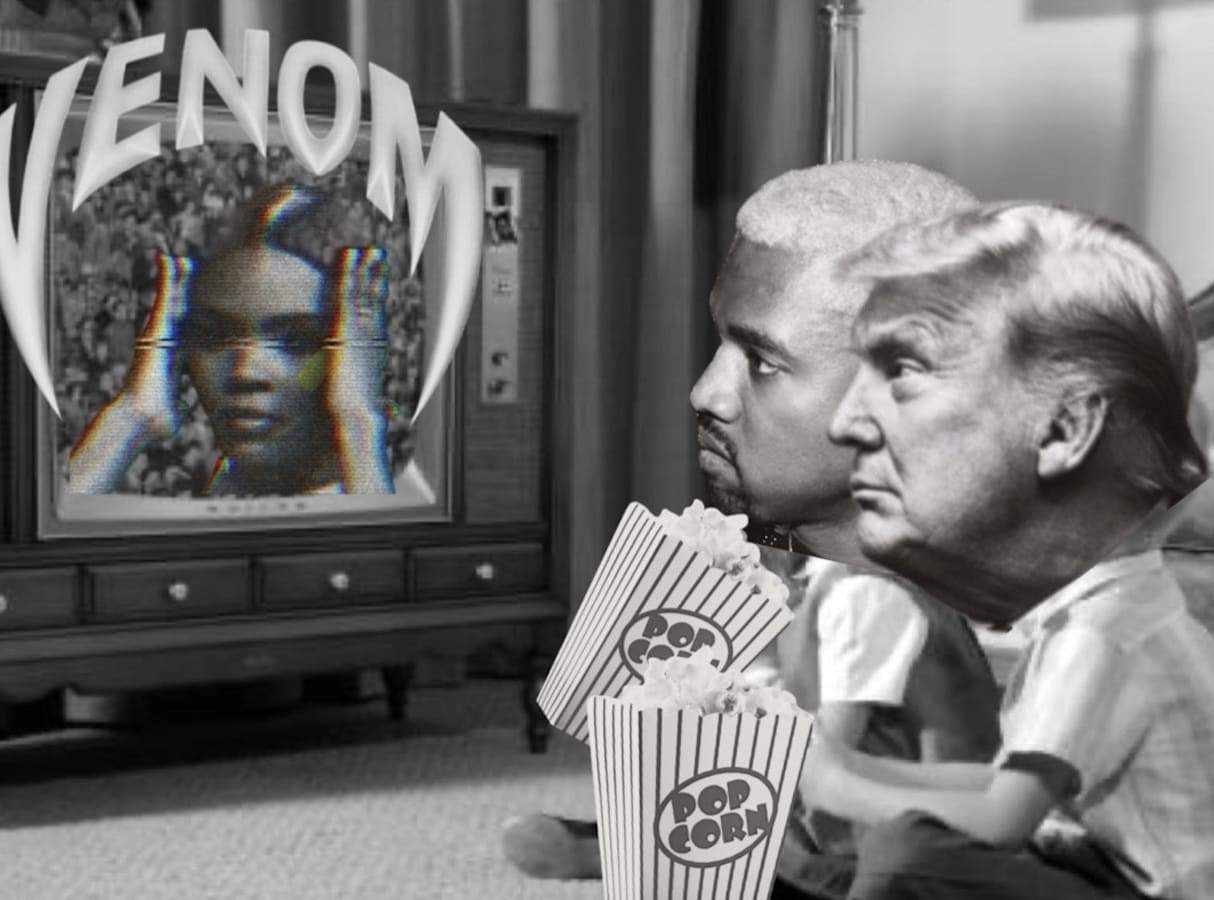
She performed an onscreen blitz. She was the woman who had been close to him first. She was the woman with whom he had been very, very close. She was so close, in fact, that she had the authority to rhetorically enter their home, their bedroom, and wield her mysterious expertise against the woman she previously identified as “Mrs. Erika Kirk” and now needled as a prime suspect, in a murder in which the suspect identified by law enforcement had long ago been apprehended and charged, however fishily.
“The implication is that’s what woke up her three-year-old daughter at 2:45 in the morning. That’s not when toddlers at the age of three wake up, okay? These are sleep-trained toddlers. Okay, Gigi wakes up at 2:45, a three-year-old kid who should be in the REM stage of sleep. Toddlers knock out. Maybe Gigi is a light sleeper. It’s also just curious that they’re all awake at 2:45 a.m. I don’t know what’s going on.”
This was the sham story about how Charlie ended up sleeping in his daughter’s bed on the final night of his life. “I’m starting to get a feeling that there might have been another reason why the daughter woke up. But stick with me. Maybe there’s noise not from excitement but from an argument,” she said.
Essential to the case Candace was building was the claim that it was hard to believe Charlie would have been filled with adrenaline on the eve of an event at a college when he had done hundreds of similar events at hundreds of similar colleges throughout his career. He was a pro.
Left unmentioned was the fact that this event was the start of a tour, the kickoff of a prolonged period of travel and taxing public events. This is true for any performer.
Candace focused instead on what we’d have to take her word and interpretation for. “Charlie messaged multiple people to say that they were going to kill him the night before,” she said.
She pointed again to the matter of Charlie’s wedding ring and what Erika had disclosed in her interview with The New York Times in the immediate aftermath of his assassination: that when he returned to the bedroom they shared on that next and final morning together, he grabbed his wedding ring and put it back on his finger. “I immediately, immediately clocked that. I said, ‘that’s weird,’ just because I know Charlie, but I couldn’t explain that to the audience. I know Charlie. Charlie’s the kind of person who could sleep with his boots on. Like, this little ring?”
“Erika is exceedingly uncomfortable discussing Charlie’s final day,” she said. She scrutinized Erika’s every breath and syllable, assuming the worst and with little apparent appetite to be dissuaded from those assumptions.
“I am told…” she said, though she would not say who told her what she was about to share. She reminded viewers that Erika mentioned, in an interview with Glenn Beck, that a priest had visited their home the night before his death. “We did what we usually did before tours,” Erika had said. “We said our prayer and we asked the Lord to protect us, and we asked the Lord that his will be done.”
Candace distrusted the story. It was implausible, she suggested, that a priest would have prayed with Charlie and Erika on that fateful night simply for the usual protection. In fact, what she knew from her unnamed source was that the prayer was for something else, something that supported her swelling suspicions about Erika. The priest had not arrived at the Kirk household to compel God to protect the family from harm, but to protect the Kirk marriage from ruin. “[The] priest came over to pray over Charlie and Erika’s marriage,” Candace said.
Absent from Candace’s telling was the appropriate context for the event she discussed. Glenn Beck interviewed Erika Kirk as conspiracies related to the assassination of Charlie Kirk engulfed her. The script in which Erika was cast as a potential suspect in the shooting that killed her husband and permanently disfigured her family was authored, in considerable part, by Candace. Since his death, she has devoted dozens of episodes of her weekday program to an “investigation” that has implicated many institutions and individuals, but has increasingly focused on the state of Israel and Erika Kirk. As Candace sought to wrest control of the narrative around her husband, Erika tried to survive the one unfolding around her.
Erika said this was because Charlie had received death threats, and their children had received threats, in increasing numbers as the polarized American political mood grew more volatile. What Candace had been told lacked that context.
“The picture that is starting to emerge is that Charlie’s last day consisted of a lot of arguments. Arguments over his shifting away from the pro-Israel position, him communicating to people that he was over it, that he did not want the money, him communicating to people that he wanted to bring me back to Amfest.”
“I feel, and I could be wrong, that there was a knock ’em dead argument that happened. That’s what makes logical sense to me about what I don’t know. That’s what makes sense.”
“They have not been honest about that relationship,” Candace said. It wasn’t “this amazing, godly relationship.”

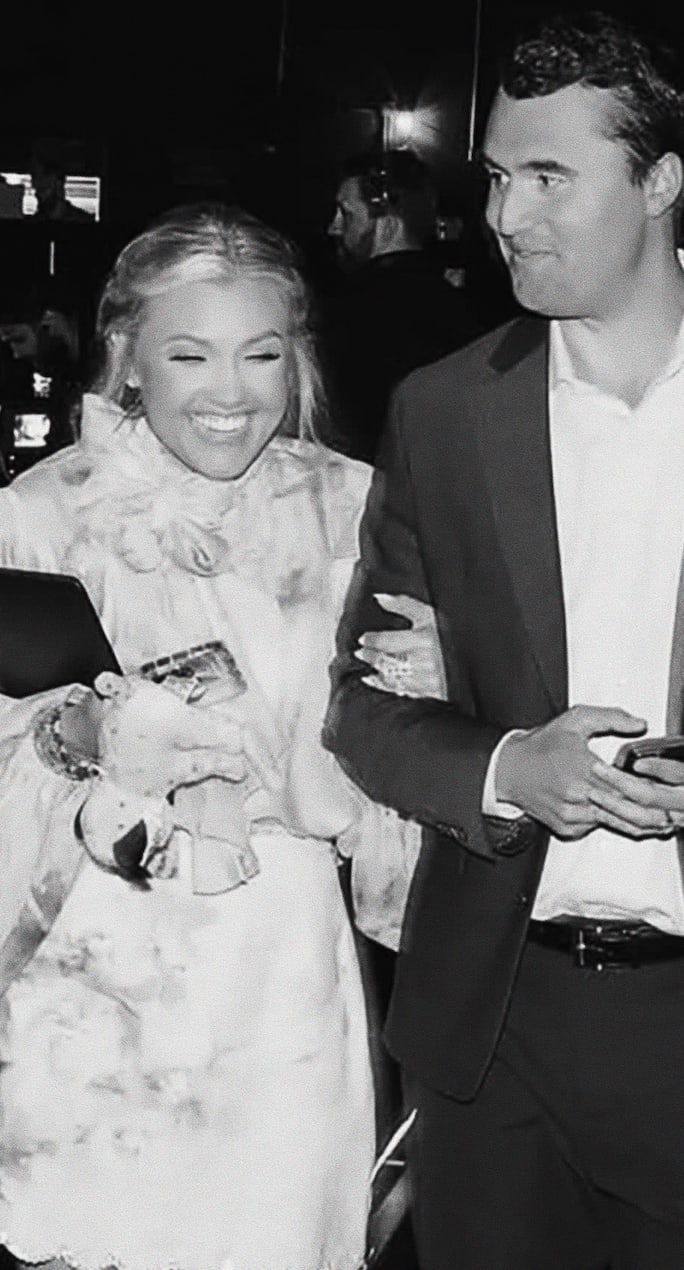

Take it from her. Donald Trump welcomed Erika as his guest at the State of the Union last month, a decisive statement that, no matter how fractured the conservative movement may be, and no matter how the hatred against her spins jagged and viral, the conspiratorially aligned president himself has made his choice and his example clear. This could be because it’s the right thing to do. It could be, more cynically, because it’s the politically advantageous thing to do: It’s an endorsement from Charlie Kirk that now polls almost as powerfully in intraparty contests as an endorsement from Trump himself, and the midterms are on the horizon, with all their implications for the second half of the president’s second term in office and his legacy to follow. Whatever the intention, it’s true that it’s Charlie who inspired loyalty and who received, officially, some decency and some shelter for his family in return.
Candace Owens was not invited to the event in Washington. The last time she heard from the president, the moment was so monumental that she announced it to the camera in her studio, her smile wide and prideful.
The next afternoon, she debuted Bride of Charlie. Its horror-style aesthetics were no match for the horror of the program itself, which has featured mimicry of the tearful words spoken by Erika in the hours after the event that transformed her, by a matter of seconds and centimeters, from wife to widow and mother to two fatherless babies.
The series has featured unwieldy climbs through tenuous branches of the Erika Kirk family tree; accusations that Erika is connected to foreign governments, intelligence agencies, Jeffrey Epstein and global trafficking operations, war contracting, and ambiguous child abuse committed, perhaps, against hypothetical war-ravaged children; and allegations that she had a sexually inappropriate relationship with an underage girl, which is then tied to the implication that she is a closeted lesbian, which is then tied to the insinuation that she is just like the First Lady of France, by which I mean a biological male.
By the eighth episode of the series, Candace had succeeded in further sullying Erika, but had turned up no proof that she was anything other than a widow trying to continue on without her husband and the father of her children. Nevertheless, the show has been popular. For some viewers, this is just entertainment, the 2026 version of a daytime soap opera.
For all her dramatic expertise, it occurred to me that she has failed to plot out one crucial thing: when the hero is always Candace Owens, and the villain is never in doubt, viewers who don’t get turned off will, eventually, get bored.
What's Your Reaction?
 Like
0
Like
0
 Dislike
0
Dislike
0
 Love
0
Love
0
 Funny
0
Funny
0
 Angry
0
Angry
0
 Sad
0
Sad
0
 Wow
0
Wow
0